

Table of Contents
- What Makes a Curated Beauty Site Different
- Independent Beauty Retailers in the UK: Quality Over Volume
- Skincare Ingredient Transparency: What to Look For
- How to Build a Minimalist Skincare Routine
- Full-Size vs Sample-Size Products: Value and Discovery
- Sustainability and Packaging: The Hidden Cost of Beauty
- Choosing the Right Curated Beauty Site for Your Needs
Last Updated: August 29, 2026
What Makes a Curated Beauty Site Different
A curated beauty site carefully selects a limited collection of skincare, makeup, and haircare products based on ingredient quality, efficacy, and brand values rather than stocking everything available. Unlike mass-market retailers that prioritize volume, curated beauty sites emphasise intentional product selection where every item has been vetted for visible results and ingredient transparency.
Most beauty shoppers face decision paralysis confronted with hundreds of products making identical promises. A curated beauty site solves this by doing the evaluation work upfront, presenting only products that actually deliver. This transforms shopping from overwhelming to purposeful.
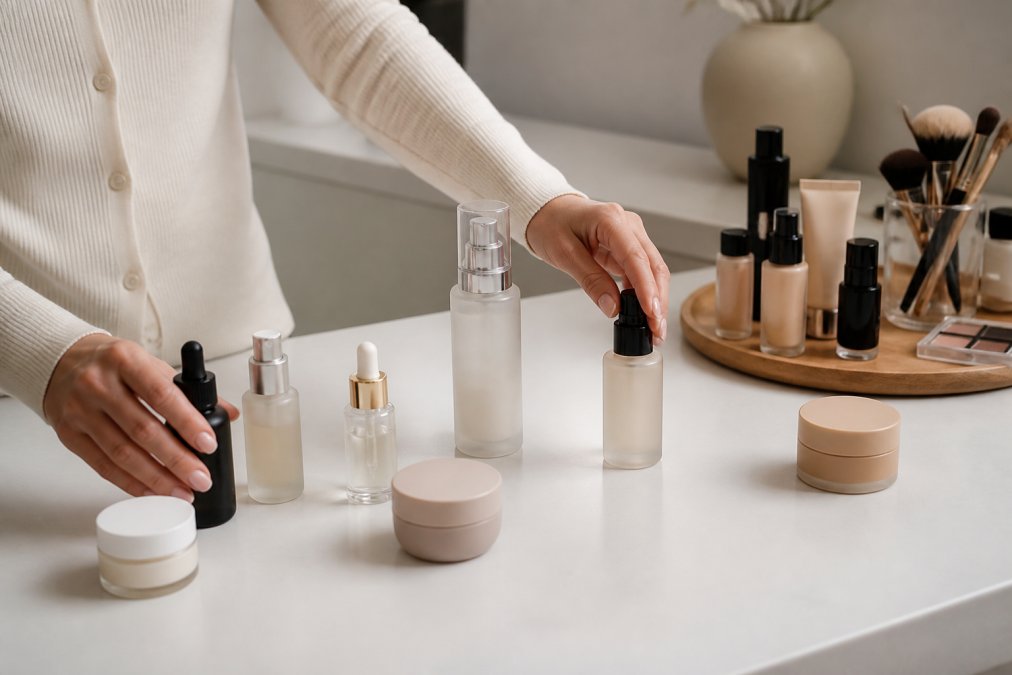
What separates a genuinely curated platform from a standard retailer is transparency about why products were chosen. At virelle beauty, for example, each product is selected for visible, authentic results without fillers or false promises. Independent beauty retailers typically limit inventory to products they'd personally recommend, provide ingredient breakdowns, feature smaller or emerging brands, and say no to products that don't meet their standards.
The value proposition is straightforward: fewer choices, but better ones. You spend less time researching because the curation has been done, and you're more likely to see actual results because products are selected for efficacy, not profit margins.
Independent Beauty Retailers in the UK: Quality Over Volume
Independent beauty retailers operate on a different principle than department stores: they believe fewer, better products serve customers more honestly than endless choice. Editorial independence means making product decisions based on customer benefit, not supplier relationships or wholesale margins. They can drop a bestselling brand if quality drops or feature an unknown product if it works.
The UK market has seen growing demand for this approach as consumers question whether a product's popularity reflects actual quality or just marketing spend. Independent retailers answer this by curating selections that reflect real efficacy rather than brand budgets, often featuring vegan and cruelty-free options prominently.
Pricing on independent platforms tends to be competitive because lower overhead gets passed to customers through better value-to-cost ratios. Free UK shipping on orders over £30, as offered by virelle beauty, reflects this operational reality. When you're selective about what you stock, you can afford to offer better terms.
Customer service differs markedly from mass-market retailers. With fewer products, staff can actually know them, discuss ingredients, recommend alternatives, and handle returns without bureaucratic friction.
Skincare Ingredient Transparency: What to Look For
Ingredient transparency separates trustworthy beauty retailers from those using marketing to obscure what's actually in products. Transparent platforms publish full ingredient lists alongside products and explain what each ingredient does in plain language, not marketing speak.
Look for retailers that discuss concentration levels. A product might contain a beneficial ingredient at such a low concentration that it provides minimal benefit. Transparent platforms acknowledge this, noting when a product contains a hero ingredient at an effective dose versus when it's present mainly for marketing purposes.
Cruelty-free and vegan certifications matter to many shoppers, but certifications vary in stringency. A reputable curated site explains which certifications they recognise and why. Some retailers discuss supply chain practices and environmental impact of packaging, signalling that ingredient transparency extends beyond marketing compliance into genuine ethical commitment.
Red flags include vague terminology like "natural extracts" without specifics, claims that a product is "chemical-free," or ingredient lists that read like marketing copy. Trustworthy retailers use precise language and acknowledge trade-offs honestly.
How to Build a Minimalist Skincare Routine
A minimalist skincare routine delivers visible results with fewer products, reducing cost, complexity, and the risk of ingredient conflicts that irritate sensitive skin (peer-reviewed research).
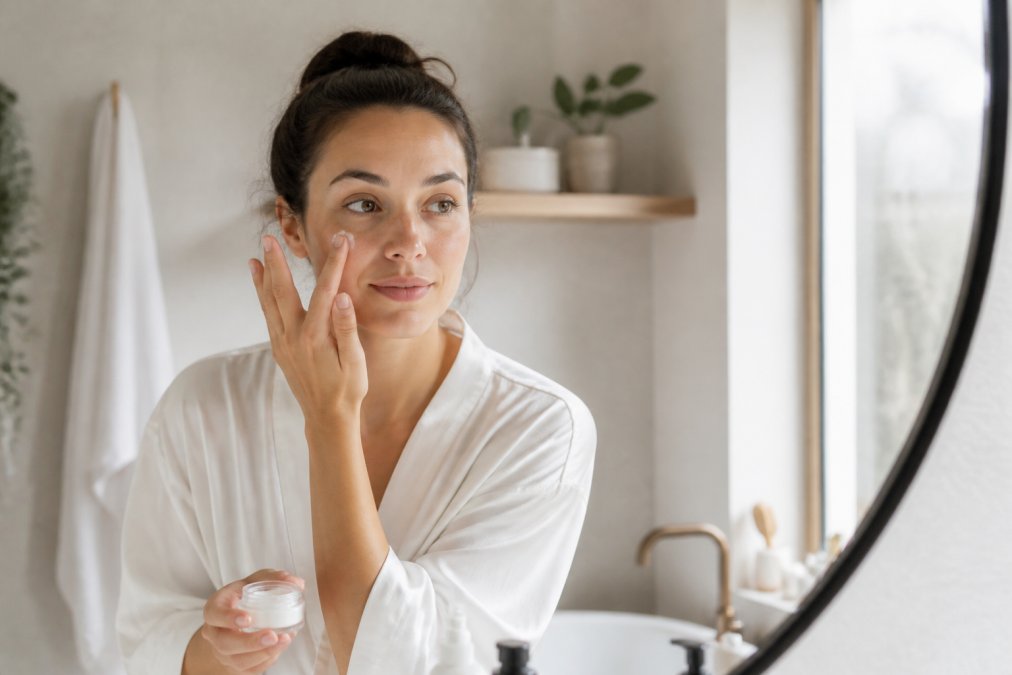
Start by identifying your actual skin concern. Is your skin dry, oily, combination, or sensitive? Does it have active acne, rosacea, hyperpigmentation, or fine lines? Spend a week using only a gentle cleanser and moisturiser to understand your baseline skin state.
A functional minimalist routine has three components: cleanse, treat, protect. Cleansing removes daily grime and makeup (the American Academy of Dermatology). Treating addresses your specific concern with one active ingredient: a retinol for ageing, niacinamide for oil control, azelaic acid for rosacea. Protecting means moisturiser and SPF during the day.
Add products only when your baseline routine isn't addressing a concern. If your skin is clear and hydrated after two weeks, stop. Adding more products increases the chance of irritation without increasing results. If you have a specific concern, add one treatment product and use it consistently for at least four weeks before evaluating.
The order matters: cleanse first, apply water-based treatments while skin is slightly damp, layer heavier creams last, and apply SPF on top during the day. At night, skip SPF but keep the rest of the sequence.
Ingredient compatibility prevents waste. Don't use vitamin C and niacinamide in the same routine if you have sensitive skin (peer-reviewed research). Don't layer multiple actives. One active per routine is the rule.
| Step | Product Type | Purpose | Frequency |
|---|---|---|---|
| 1 | Gentle cleanser | Remove impurities | Twice daily |
| 2 | Targeted treatment | Address specific concern | Once or twice daily |
| 3 | Moisturiser | Hydrate and protect barrier | Twice daily |
| 4 | Sunscreen | UV protection | Once daily (AM only) |
A functional routine costs less than £50 per month if you choose products thoughtfully. Curated retailers help by featuring products that deliver results without unnecessary markup. Consistency matters more than complexity. Someone using three products consistently will see better results than someone rotating through twelve products sporadically.
Full-Size vs Sample-Size Products: Value and Discovery
The choice between full-size and sample-size products depends on your goal: discovery or commitment. Sample-size products, typically 5-15ml, serve a specific purpose: testing whether a product works for your skin before committing to a full-size bottle. They cost less upfront, reducing financial risk. For someone with sensitive skin, samples let you patch-test a product on a small area first.
The trade-off is cost per millilitre. A sample might be £3 for 5ml, while the full-size is £25 for 50ml. Per millilitre, the sample costs significantly more. This makes sense only if you're genuinely testing a product you're uncertain about. If you already know you'll use it, the full-size is better value.
Full-size products offer better value-to-cost ratios when you're confident in your choice and reduce packaging waste. For products you use daily, full-size is almost always the smarter choice economically.

Some retailers offer discovery boxes combining samples of multiple products, which can be a middle ground. These work well if you're trying to find new favourites without committing to full-size bottles.
Buying full-size products you'll actually use creates less packaging waste than buying multiple samples you might discard. However, buying full-size products you won't finish is worse than buying samples. The key is honest self-assessment about whether you'll use something.
Sustainability and Packaging: The Hidden Cost of Beauty
The environmental impact of beauty products extends far beyond the product itself. Packaging waste, transportation emissions, and ingredient sourcing create a hidden cost that most retailers don't discuss.
Packaging accounts for the majority of beauty product waste. A typical skincare routine generates significant packaging waste annually. Curated retailers increasingly address this by featuring products with minimal or recyclable packaging. Some brands now offer refillable containers, which significantly reduce packaging waste over time.
Transportation emissions represent another hidden cost. Retailers offering free UK shipping on orders over £30 can consolidate shipments and reduce per-item emissions compared to multiple small orders.
Ingredient sourcing matters too. Some brands source palm oil, which drives deforestation. Others use unsustainably harvested botanicals. Transparent retailers discuss sourcing practices, not just marketing the "natural" angle. A curated platform has already vetted suppliers and can point you toward products with genuinely sustainable sourcing.
Vegan and cruelty-free products often align with sustainability values, though not always. A vegan product using unsustainably sourced ingredients isn't automatically better for the environment than a product with animal-derived ingredients from ethical sources.
Choosing the Right Curated Beauty Site for Your Needs
Selecting a curated beauty platform depends on matching the retailer's curation philosophy to your actual priorities. Start by identifying what matters most: ingredient transparency, sustainability, price, specific product categories, or brand discovery.
Examine the selection criteria. Does the retailer publish why they chose each product? Do they discuss ingredient concentrations, potential sensitivities, or use cases? Platforms that explain their curation are more trustworthy than those that simply list products with marketing copy.
Check customer service accessibility. Can you reach someone with product knowledge if you have questions? Do they handle returns easily? Curated retailers typically offer better customer service than mass-market options, but quality varies.
Consider the price point. Curated retailers generally offer better value than department stores, but some focus on luxury brands while others specialise in accessible pricing. virelle beauty positions itself as offering quality without unnecessary markup, making curated selection accessible without premium pricing.
Evaluate shipping and return policies. Free UK shipping on orders over £30 is standard for platforms like virelle beauty. Check whether returns are free and whether there's a reasonable window to return products that don't work for your skin.
Look at specialisation. Some curated sites focus exclusively on skincare, others combine skincare with makeup and tools. Choose accordingly based on your needs.
Test the platform with a small order before committing to larger purchases. This real-world test reveals whether the retailer's curation aligns with your preferences.
Choosing where to buy beauty products shapes your entire skincare and makeup experience. A curated beauty site removes the noise, presenting products chosen for efficacy and transparency rather than marketing budgets. For those tired of endless choice and false promises, this approach delivers genuine relief.
virelle beauty exemplifies this philosophy by curating a refined collection where every product has been selected for visible, authentic results. The focus on ingredient transparency, minimal packaging waste, and free UK shipping on orders over £30 reflects a business model built on customer benefit rather than volume. When you're ready to move beyond mass-market beauty toward intentional selection, a genuinely curated platform transforms shopping from overwhelming to purposeful.
Frequently Asked Questions
What defines a curated beauty retailer versus a mass-market store?
A curated beauty site carefully selects products based on ingredient quality, efficacy, and brand philosophy rather than stocking everything available. Independent beauty retailers prioritise ingredient transparency and authentic results over trend-chasing. They typically offer expert guidance on product selection and maintain strict standards for what appears on their platform, ensuring every item serves a genuine purpose in your beauty routine.
How do I identify authentic skincare products when shopping online?
Look for retailers that display full ingredient lists, manufacturing dates, and batch numbers. Check whether the site explains why each product was selected and what makes it different. Skincare ingredient transparency means the retailer should clearly state what's in the product and why those ingredients matter. Avoid sites that use vague claims like 'natural' or 'clean' without backing them up with specific ingredient information or third-party certifications.
Are beauty subscription boxes worth the investment in 2026?
Subscription boxes offer value if they align with your skin type and preferences through personalised selection. The real benefit lies in discovery and convenience rather than cost savings. However, be cautious of boxes that prioritise volume over quality. Calculate the retail value of included products against what you'd pay buying individually. Independent beauty retailers often provide better value through curated one-off purchases rather than monthly commitments.
What should I look for in a beauty retailer's ingredient policy?
Choose retailers that openly disclose their ingredient standards, such as excluding certain fillers or synthetic fragrances. They should explain their curation criteria and be transparent about what 'clean' or 'natural' means to them specifically. Look for sites that highlight ingredient sourcing, stability, and efficacy data. Retailers committed to ingredient transparency will answer questions about product compatibility with sensitive skin and provide guidance on building routines without conflicting actives.
This article was written using GrandRanker
0 comments