

Table of Contents
- What Makes Salon Quality Hair Styling Tools Different
- Professional Hair Dryer for Home Use
- Automatic Curling Wands for Salon-Worthy Waves
- How to Prevent Heat Damage on Fine Hair
- Choosing the Right Styling Tool for Your Hair Type
- Maintenance and Longevity of Professional Styling Tools
- Conclusion
Last Updated: August 23, 2026
What Makes Salon Quality Hair Styling Tools Different
Salon quality hair styling tools aren't just more expensive versions of budget alternatives. They're engineered with precision components that deliver consistent results across repeated use, protect hair from thermal damage, and maintain performance over years rather than months.
The difference comes down to heat distribution technology, material composition, and build quality. Professional tools use ceramic or tourmaline-coated barrels that heat evenly, preventing hot spots that damage hair. They include variable temperature controls calibrated in smaller increments (often 5-degree steps rather than three broad settings). Most importantly, they're designed for daily professional use, meaning they recover heat quickly between sections and handle prolonged styling sessions without throttling performance.
At virelle beauty, we've curated a selection of salon quality hair styling tools that embody these principles. What separates genuine professional tools from marketing hype is whether they deliver measurable results: uniform curls, reduced frizz, faster styling times, and healthier-looking hair over time.

The tools that make this list share three core characteristics. First, they use advanced heating technology that protects the hair cuticle rather than forcing moisture out. Second, they offer genuine control through adjustable settings and thoughtful design. Third, they're built to last, not disposable items that fail after a season of use. These aren't luxury purchases; they're investments that pay dividends every time you style.
Professional Hair Dryer for Home Use
A professional hair dryer transforms drying time from a chore into a controlled styling step. The key difference between professional and consumer dryers is wattage, motor type, and ionic technology. Professional dryers typically run 1400W or higher with DC motors that maintain consistent airflow, whereas budget dryers often use cheaper AC motors that lose power as they heat up (peer-reviewed research).
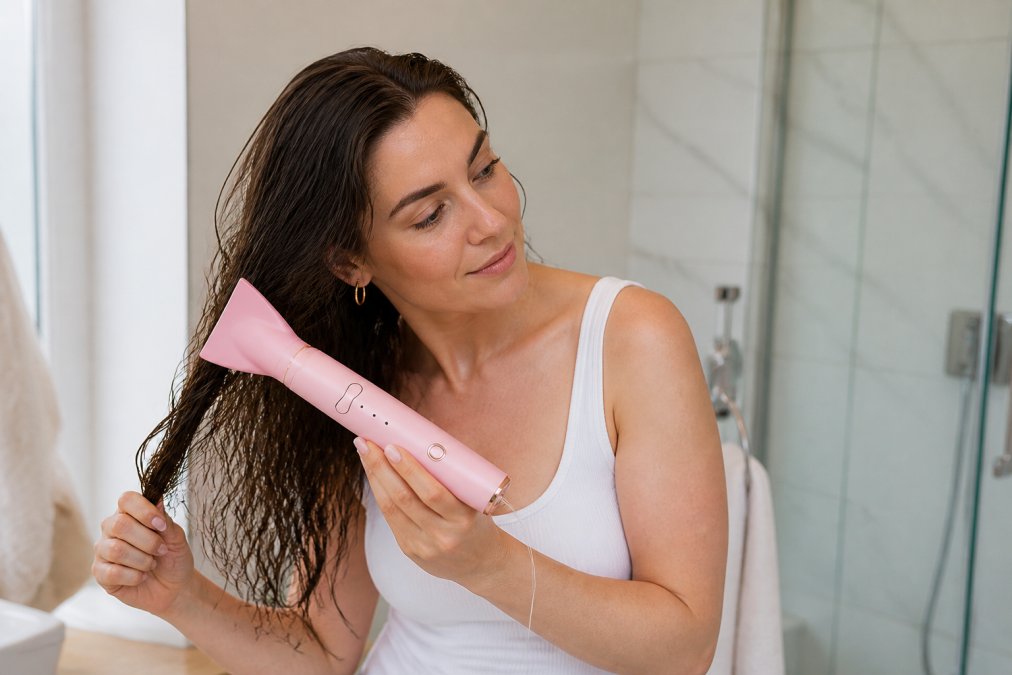
The virelle beauty Hair Dryer 1400W delivers professional-grade performance at home. Running at 1100W with a DC motor, it features 3 heat settings, 2 speed options, and a cool shot button, essential for sealing the hair cuticle and locking in moisture. The ionic technology reduces frizz by breaking down water molecules into smaller particles that absorb into hair more evenly. It includes a diffuser attachment for texture and two concentrator nozzles for precision styling, priced at £39.99.

What matters most: the cool shot button. This isn't a gimmick. After styling with heat, a final blast of cool air closes the hair cuticle, which locks in moisture and creates a smoother surface that reflects light better (peer-reviewed research). This single feature is why salon-dried hair looks shinier than home-dried hair.
Drying technique affects results as much as the tool itself. Start with towel-dried hair, not dripping wet. Section your hair and dry roots first, working toward ends. Use the concentrator nozzle to direct airflow and maintain control. The cool shot button should be your final step on each section before moving on.
Automatic Curling Wands for Salon-Worthy Waves
Automatic curling wands eliminate the skill gap between professional stylists and home users. Instead of manually wrapping hair around a barrel, the tool does it automatically, ensuring consistent tension and heat exposure. This means uniform curls every time, even for beginners.
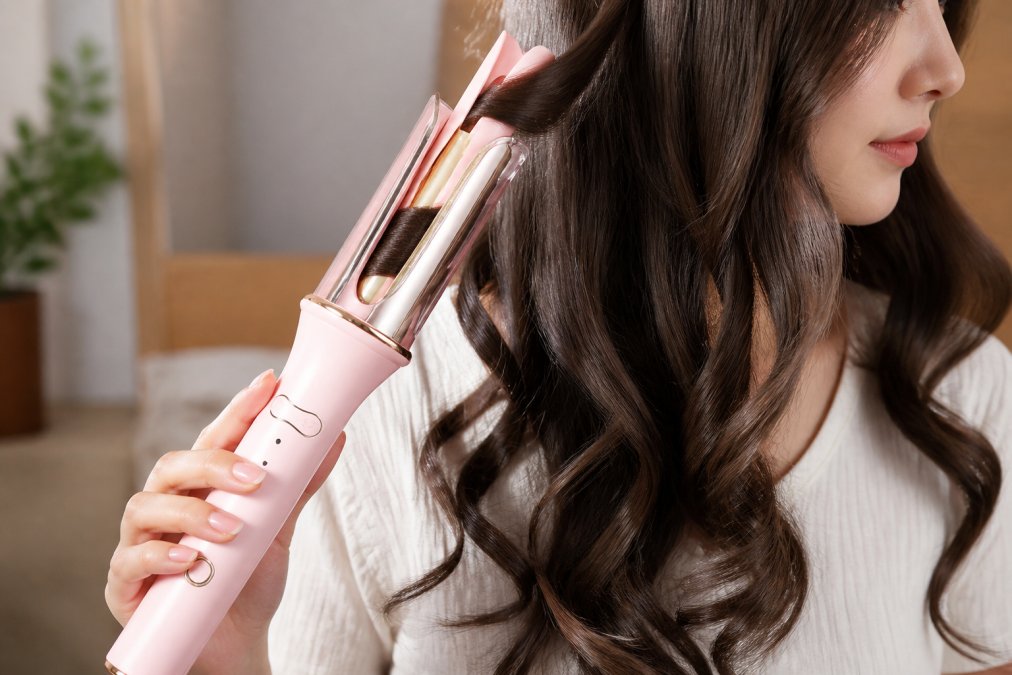
The virelle beauty Hair Curler Automatic Rotating Long Barrel Curling Wand delivers salon-quality curls through its point-and-press operation. Insert a section of hair, press, and the barrel automatically wraps and heats it. The tool includes 3 adjustable temperature settings for different hair types, left and right rotation options for directional control, and automatic timers with acoustic signals indicating when each curl is ready. Priced at £39.99, it's designed for long hair but works on medium lengths as well.

The rotating barrel technology matters because it creates tension automatically. Manual curling irons require you to maintain consistent tension while wrapping, too loose and the curl falls out, too tight and you damage hair. Automatic rotation removes this variable, producing uniform results.
Curl direction control opens styling possibilities. Curling away from the face on both sides accentuates features and creates volume. Alternating directions between sections produces natural-looking texture and width. Uniform direction creates sleek, Hollywood-style waves. The versatility means one tool adapts to multiple looks.
Temperature settings should match hair type. Fine or damaged hair needs lower settings (around 160°C), medium hair works at 180°C, and thick or coarse hair tolerates 200°C+. The acoustic signal tells you when the curl is set, typically 8-12 seconds depending on hair thickness and temperature.
How to Prevent Heat Damage on Fine Hair
Fine hair is more susceptible to heat damage because each strand is thinner, meaning heat penetrates deeper and moisture evaporates faster. Prevention requires three strategies: lower temperatures, thermal protection products, and limiting heat styling frequency.
Temperature is the primary control. Fine hair should rarely exceed 160-180°C. At these temperatures, the water inside the hair shaft heats gradually, allowing moisture to escape without damaging the protein structure. Above 200°C, damage accelerates exponentially (peer-reviewed research). Professional tools with precise temperature control matter here, budget dryers with vague "high/medium/low" settings often run hotter than indicated.
Thermal protection products create a barrier between hair and heat. These work by coating the hair shaft with silicones or plant-based polymers that slow moisture loss. Apply them to damp hair before heat styling. They're not optional for fine hair, they're foundational.
Moisture retention determines how quickly heat damage becomes visible. Hair that's well-hydrated tolerates heat better than dry hair because it has more water to lose before structural damage occurs. Deep conditioning once weekly, using leave-in conditioners, and avoiding harsh sulfate shampoos all preserve moisture.
The hair cuticle, the outer layer of overlapping cells, closes when cool and opens when hot. When the cuticle is open (during heat styling), moisture escapes. Sealing it with cool air at the end of styling locks moisture in. This is why the cool shot button on professional dryers matters: it's not just for shine, it's for protection.
Frequency matters as much as temperature. Fine hair benefits from air-drying or low-heat styling 2-3 days per week. Even with perfect technique, cumulative heat exposure damages fine hair faster than thick hair. Alternating heat-free styling days gives hair time to recover.
Choosing the Right Styling Tool for Your Hair Type
Hair type determines which salon quality hair styling tools will deliver results. The primary factors are thickness (fine, medium, thick), texture (straight, wavy, curly), and condition (healthy, damaged, colour-treated).
Fine or thin hair needs tools with lower maximum temperatures and even heat distribution. Automatic curling wands work well because they apply consistent heat without requiring manual tension that can stress fine strands. Professional hair dryers with ionic technology reduce frizz on fine hair. Avoid heavy serums or oils that weigh fine hair down; use lightweight thermal protection sprays instead.
Medium hair is most forgiving. It tolerates the full range of professional tools without special precautions. Both automatic curling wands and traditional curling irons work well. Medium hair responds well to volume-building techniques like diffuser attachments on dryers and alternating curl directions.
Thick or coarse hair needs higher temperatures (190-220°C) and tools with fast heat recovery. Thick hair has more mass to heat through, so lower temperatures result in slow styling and incomplete curl setting. Professional dryers with high wattage and quality motors maintain airflow through dense hair. Automatic curling wands with adjustable temperature work, but ensure the maximum setting reaches at least 200°C.
Wavy or curly hair benefits most from diffuser attachments on dryers, which distribute airflow to enhance natural texture rather than fight it. Automatic curling wands can enhance existing wave or curl. Straight-barrel tools are less useful unless you're straightening curly hair intentionally.
Colour-treated or damaged hair requires lower temperatures across all tools. Colour fades faster when exposed to high heat, and damaged hair has already lost protective proteins. Maximum temperature should stay below 180°C. Thermal protection products are non-negotiable. Consider air-drying or heatless styling methods 3-4 days per week.
The most expensive tool won't deliver results if it's wrong for your hair. A £200 curling wand designed for thick hair will damage fine hair, even if it's technically superior. Match the tool's capabilities to your hair's needs.
| Hair Type | Ideal Temperature Range | Best Tool Type | Key Feature to Prioritise |
|---|---|---|---|
| Fine/thin | 160-180°C | Automatic curling wand | Even heat distribution, lower max temp |
| Medium | 180-200°C | Either dryer or curling wand | Versatility and control |
| Thick/coarse | 190-220°C | High-wattage dryer or curling wand | Fast heat recovery, high max temp |
| Colour-treated | 160-180°C | Ionic dryer with cool shot | Heat damage prevention |
| Curly/textured | Variable | Diffuser attachment dryer | Texture enhancement |
Maintenance and Longevity of Professional Styling Tools
Professional tools cost more upfront because they're built to last 5-10 years with proper care. Budget tools often fail within 12-18 months. The difference is maintenance.
Heat-resistant buildup accumulates on barrels and heating elements over time. Product residue, mineral deposits from hard water, and dust reduce heat transfer efficiency. Clean the barrel weekly with a damp cloth while the tool is cool and unplugged. For stubborn buildup, use a slightly damp microfiber cloth with a drop of white vinegar. Never use abrasive scrubbers that damage the ceramic or tourmaline coating.
Cord care prevents internal damage. Never wrap the cord tightly around the tool while it's hot, this stresses the wires inside and causes shorts. Instead, coil it loosely beside the unit after it cools completely. Store in a dry location away from moisture, which corrodes electrical components.
Battery-powered tools like the virelle beauty Electric Scalp Massage Comb require regular charging even during off-seasons. Lithium batteries degrade if left completely discharged for months. Charge every 3 months during storage to maintain battery health.
Heat-resistant mats protect surfaces and prevent accidental damage. Professional stylists use them because a hot barrel left on a bathroom counter can melt plastic or damage wood. A simple heat-resistant mat costs £10-15 and extends tool lifespan by preventing damage from accidents.
Temperature fluctuations during storage matter. Extreme cold can damage internal components, and extreme heat accelerates wear. Store tools in a cool, dry place, not in a car, attic, or unheated shed. Room temperature storage (15-25°C) is ideal.
Replacement parts extend tool life. Many professional tools have replaceable barrels, heating elements, or cords. Before replacing an entire tool, check if parts are available. virelle beauty products come with manuals specifying compatible parts and suppliers.
Professional tools rarely break suddenly. They degrade gradually, slower drying, uneven heating, reduced curl hold. These are signs maintenance is overdue or the tool is nearing end of life. Recognising these signals lets you plan replacement before the tool fails mid-style.
Choosing salon quality hair styling tools means investing in consistency, protection, and longevity. The virelle beauty collection, from the 1400W professional hair dryer to the automatic rotating curling wand, delivers the precision and durability that make daily styling feel like a purposeful ritual rather than a rushed necessity. With free UK shipping on orders over £30, building a professional toolkit at home becomes accessible. Start with one tool that matches your primary styling need, master it, then expand your collection as your skills develop. Professional results follow from professional tools paired with proper technique and maintenance.
Frequently Asked Questions
Q: What makes a hair styling tool salon quality rather than basic?
A: Salon quality hair styling tools combine professional-grade materials like ceramic and tourmaline coatings with precise heat distribution and variable temperature control. They feature advanced technologies such as ionic airflow to reduce frizz, faster heat recovery times, and ergonomic designs built for extended use. Professional tools deliver consistent results across multiple uses, whereas consumer-grade alternatives often produce uneven heat distribution and damage hair cuticles. The difference shows in shine, smoothness, and curl longevity.
Q: How do I prevent heat damage on fine hair when using styling tools?
A: Fine hair requires lower temperature settings, typically between 150-180°C. Always apply thermal protection spray before styling to seal the hair cuticle. Use a concentrator nozzle on your hair dryer to direct airflow and reduce overall heat exposure. Limit styling frequency to 2-3 times weekly and allow hair to air-dry partially first. Professional tools with variable temperature control and ionic technology help minimize damage by distributing heat evenly. Consider using a heat-resistant mat when resting hot tools.
Q: Are expensive salon quality hair styling tools worth the investment?
A: Professional-grade tools cost more upfront but deliver measurable benefits: reduced hair damage, faster styling times, and results that last longer between washes. They typically last longer with proper care, whereas budget alternatives may need replacing more frequently. When you calculate cost-per-use over time, professional tools can become more economical. They also reduce the need for salon visits, offsetting the initial investment. For anyone styling regularly, the improved results and hair health justify the premium price.
Q: What is the difference between a professional hair dryer for home use and salon equipment?
A: Professional hair dryers for home use deliver salon-level performance in a consumer-friendly size and weight. They feature ionic technology, variable heat settings, and professional wattage (1100-1400W) without the industrial noise or bulk of salon-only equipment. Home professional models include attachments like diffusers and concentrator nozzles for versatility. The key difference is portability and ease of storage, not capability. A quality home professional dryer produces the same frizz reduction and shine as salon equipment.
This article was written using GrandRanker
0 comments