

Table of Contents
- Understanding Sensitive Skin: Triggers and Signs
- Skincare Ingredients to Avoid for Sensitive Skin
- Your Effective Skincare Routine for Sensitive Skin: Morning Steps
- Your Effective Skincare Routine for Sensitive Skin: Evening Steps
- How to Patch Test Skincare Products the Right Way
- Seasonal Adjustments and Non-Skincare Interactions
- The Psychological Side of Living With Sensitive Skin
- Conclusion
Last Updated: August 8, 2026
Understanding Sensitive Skin: Triggers and Signs
Sensitive skin occurs when the skin's protective barrier is compromised, making it reactive to stimuli that would not affect more resilient complexions. Understanding your triggers is the foundation of any effective skincare routine for sensitive skin. Without that knowledge, you are essentially guessing, and guessing with reactive skin tends to end badly.
Common Triggers That Cause Flare-Ups
The most common triggers include:
- Fragrance (both synthetic and natural): one of the leading causes of contact dermatitis in cosmetic products
- Alcohol-based formulations: strip the lipid barrier and accelerate transepidermal water loss
- Extreme temperatures: cold wind and central heating both dehydrate the skin and provoke inflammation
- Harsh surfactants: found in many conventional cleansers, they disrupt the skin's pH balance
- Stress and hormonal fluctuation: both have a documented effect on skin sensitivity and redness
- Environmental pollution: fine particulate matter penetrates the skin and triggers an inflammatory response
According to British Association of Dermatologists guidance on contact dermatitis, fragrance is one of the most frequently identified allergens in cosmetic products in the UK.
Signs of a Damaged Skin Barrier
A damaged skin barrier is the underlying condition behind most cases of chronic skin sensitivity. The skin barrier is the outermost layer of the epidermis, responsible for keeping moisture in and irritants out. When it is compromised, the skin becomes reactive, dry, and prone to inflammation.
Signs to watch for include persistent tightness or burning after cleansing, redness that does not resolve quickly, flaking or rough texture despite regular moisturising, products that previously worked now causing irritation, and increased sensitivity to temperature changes. If several of these apply to you, barrier repair should be the primary goal of your routine.
Skincare Ingredients to Avoid for Sensitive Skin
Most guides list what to add to your routine. This section is about what to remove first, because reducing irritation is faster and more effective than adding soothing ingredients on top of a product that is actively causing harm.
Skincare ingredients to avoid for sensitive skin include:
- Synthetic fragrance (Parfum): listed as a single ingredient but can contain dozens of undisclosed compounds
- Denatured alcohol (Alcohol Denat.): drying and barrier-disrupting, common in toners and serums
- Sodium Lauryl Sulphate (SLS): a harsh surfactant found in foaming cleansers and some soap bars
- Physical scrubs with rough particles: cause micro-tears and worsen inflammation in reactive skin
- High-concentration vitamin C: can sting and irritate sensitive skin, particularly in ascorbic acid form
- Retinoids at high strength: valuable long-term, but must be introduced slowly and avoided during active flare-ups
- Essential oils: lavender, citrus, and peppermint are common irritants despite their "natural" reputation
Ingredients That Genuinely Soothe and Repair
Once you have cleared the irritants, these are the ingredients that make a real difference for reactive skin:
- Ceramides: lipids that are structurally identical to those found in the skin barrier; they physically rebuild the lipid barrier and reduce transepidermal water loss
- Hyaluronic acid: a humectant that draws moisture into the skin; effective at low molecular weights that penetrate the upper layers
- Niacinamide (Vitamin B3): reduces redness, strengthens the barrier, and has a strong safety profile for sensitive skin
- Centella Asiatica (Cica): a calming agent with well-documented anti-inflammatory properties
- Panthenol (Vitamin B5): an emollient and humectant that supports barrier repair
- Colloidal oatmeal: soothes irritation and is recognised by dermatologists as a skin protectant
- Snail mucin: contains glycoproteins, hyaluronic acid, and glycolic acid; supports hydration and skin repair without the harshness of synthetic actives
The National Eczema Society's guide to skin care ingredients provides a useful reference for identifying ingredients appropriate for reactive and compromised skin conditions.

| Ingredient | Function | Best For |
|---|---|---|
| Ceramides | Barrier repair, reduces water loss | Dry, compromised barrier |
| Hyaluronic acid | Humectant, deep hydration | Dehydrated, tight skin |
| Niacinamide | Reduces redness, strengthens barrier | Redness, uneven tone |
| Centella Asiatica | Anti-inflammatory, calming | Active irritation, redness |
| Snail mucin | Hydration, repair, gentle exfoliation | Sensitive, dull, or damaged skin |
| Colloidal oatmeal | Soothes, protects | Itchy, inflamed skin |
Your Effective Skincare Routine for Sensitive Skin: Morning Steps
The morning routine for sensitive skin has one overriding purpose: protect. You are preparing the skin to face the day, not treating it.
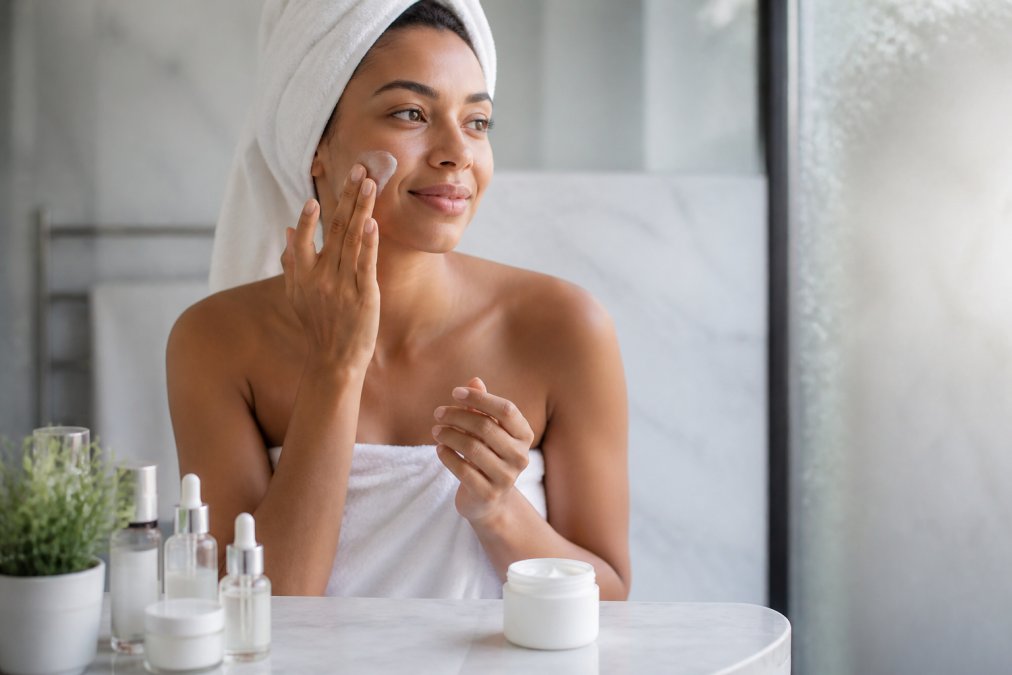
Step 1: Rinse or gentle cleanse [Time: 1-2 minutes] Many dermatologists suggest that sensitive skin does not need a full cleanse in the morning. A gentle rinse with lukewarm water is sufficient. If you prefer to cleanse, use a soap-free, pH-balanced cleanser. The Virelle Pristine Soap Bar with Green Clay, Bamboo, and Green Tea (£14.99) is formulated with natural ingredients that cleanse without stripping.
Step 2: Apply a hydrating serum [Time: 1 minute] A serum containing hyaluronic acid or panthenol applied to damp skin helps lock in moisture before it evaporates.
Step 3: Moisturise [Time: 1 minute] A good moisturiser for sensitive skin combines humectants, emollients, and occlusives to seal in hydration and reinforce the lipid barrier. The Virelle Snail Mucin Daily Moisturizer (£16.99) is lightweight and fast-absorbing, making it practical for daily use.
Step 4: Sun protection [Time: 1 minute] Sun protection is non-negotiable for reactive skin. UV exposure worsens inflammation and slows barrier repair. Choose a mineral SPF (zinc oxide or titanium dioxide) rather than a chemical filter, as mineral formulas are generally better tolerated by sensitive skin.
Your Effective Skincare Routine for Sensitive Skin: Evening Steps
The evening routine is where repair happens. The skin's regenerative processes are most active overnight, which makes this the right time to introduce any treatment-focused products.
Step 1: Double cleanse if you have worn SPF or makeup [Time: 2-3 minutes] Start with a gentle oil-based cleanser or micellar water to remove SPF and makeup. Follow with a soap-free cleanser to remove any remaining residue.
Step 2: Treatment serum (optional) [Time: 1 minute] If your skin is stable and not in a flare-up, this is where you can introduce a targeted treatment. Niacinamide is well tolerated and works for most sensitive skin types. Introduce any new treatment slowly: two to three nights per week initially, then build up.
Step 3: Moisturise or apply a repair cream [Time: 1 minute] The evening is the time for a richer formula. The Virelle Snail Mucin Repair Cream (£18.99) is designed specifically for skin that needs intensive overnight repair, delivering glycoproteins and hyaluronic acid while the skin is at rest.

Step 4: Facial oil or occlusive (for very dry or compromised skin) [Time: 30 seconds] If your barrier is significantly damaged, a thin layer of a non-comedogenic facial oil or a small amount of a balm-type occlusive as the final step will reduce transepidermal water loss overnight.
A common mistake is introducing a new active every few weeks. Give each change at least four weeks before assessing whether it is working.
How to Patch Test Skincare Products the Right Way
Knowing how to patch test skincare products is one of the most practical skills for anyone with reactive skin. A patch test is a controlled way to assess whether a product will cause an adverse reaction before you apply it to your entire face.
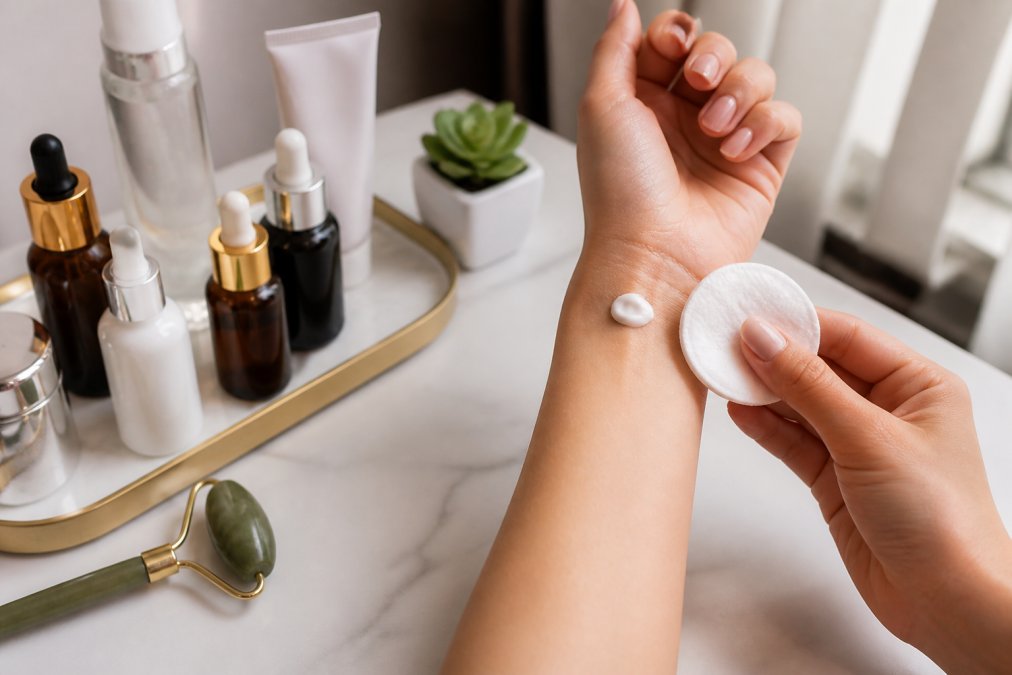
How to patch test correctly:
- Apply a small amount of the product to the inner wrist or the area just behind the ear
- Leave it on for 24 hours without washing the area
- Check for redness, itching, swelling, or a burning sensation at the 24-hour mark
- If no reaction occurs, repeat for a second 24-hour period
- If the skin remains clear after 48 hours, the product is likely safe to introduce to your face
- Introduce it to the face gradually: one application every other day for the first week
The patch test does not guarantee a product will be completely problem-free on facial skin, since the face is more sensitive than the wrist. However, it will identify significant allergens or irritants before they cause a full reaction.
For anyone with a history of contact dermatitis or confirmed allergies, a formal dermatological assessment is worth pursuing. The British Skin Foundation's guidance on patch testing explains when clinical patch testing is appropriate and how to access it through the NHS.
Seasonal Adjustments and Non-Skincare Interactions
Your skin does not exist in a vacuum. It is affected by the season, your home environment, and every product that touches it, including ones that have nothing to do with skincare.
Adapting Your Routine Through Winter and Summer
Winter is the hardest season for sensitive skin in the UK. Central heating reduces indoor humidity dramatically, which accelerates transepidermal water loss. Cold wind outside and dry air inside create a cycle of dehydration that no single moisturiser can fully counteract.
Practical adjustments for winter include switching to a richer moisturiser or adding a repair cream as a second layer in the evening, adding a humidifier to your bedroom, reducing shower temperature, and protecting exposed skin with a physical barrier before going outside.
Summer brings different challenges. Higher temperatures increase oil production and sweat, which can aggravate reactive skin. UV exposure is the most significant environmental trigger for inflammation in sensitive skin.
Practical adjustments for summer include lightening your moisturiser to a gel or lotion formula, applying and reapplying SPF consistently, rinsing the face after sweating, and avoiding introducing new actives during a heatwave.
How Laundry Products, Makeup, and Environment Affect Reactive Skin
Your pillowcase touches your face for seven or eight hours every night. If your laundry detergent contains fragrance or optical brighteners, those compounds are in contact with your skin all night. Switching to a fragrance-free, hypoallergenic detergent makes a measurable difference for many people with chronic facial sensitivity.
Makeup is another overlooked factor. Many foundations and setting sprays contain fragrance, alcohol, and silicones that can irritate reactive skin. Look for products labelled non-comedogenic and fragrance-free.
Air quality matters too. If you live in an urban area, fine particulate matter from traffic pollution settles on the skin and triggers an inflammatory response. A thorough but gentle evening cleanse is essential in this context.
The Psychological Side of Living With Sensitive Skin
Chronic skin sensitivity has a psychological dimension that almost no skincare guide acknowledges. When your skin reacts unpredictably, it creates anxiety around trying new products, attending social events, and even looking in the mirror.
This anxiety is rational. If your skin has reacted badly enough times, caution is a reasonable response. But it can also become a barrier to finding what actually works.
A few things that help: commit to testing one product at a time over a full month; keep a simple skin diary noting what you used, what you ate, your stress levels, and how your skin responded; separate identity from skin state; and seek a dermatological assessment if reactions are severe or persistent.
The Mental Health Foundation's research on skin conditions and psychological wellbeing highlights the significant overlap between chronic skin conditions and anxiety, validating what many people with sensitive skin already know from experience.
The goal of a good skincare routine is not perfection. It is a stable, predictable relationship with your skin, where you know what works, what to avoid, and what to do when things go wrong.
Sensitive skin demands patience, not complexity. The most effective skincare routine for sensitive skin is a short one, built on barrier-supporting ingredients and free from unnecessary irritants. At virelle beauty, every product in our collection is chosen with exactly this in mind: no fillers, no false promises, and a genuine focus on visible, tangible results. The Snail Revive Moisturizer (£14.99) and the Snail Mucin Repair Cream (£18.99) are a practical starting point for anyone rebuilding a damaged barrier. Explore the full range at virellebeauty.co.uk, with free UK shipping on orders over £30.

Frequently Asked Questions
How do I know if my skin is sensitive or just irritated?
Sensitive skin reacts consistently to a range of products, weather changes, and environmental factors, redness, tightness, and burning sensations appear regularly without a single clear cause. Irritated skin, by contrast, usually has one identifiable trigger, such as a new product or a harsh cleanser, and settles once you remove it. If your skin reacts to multiple unrelated things over months, a dermatological assessment is worth pursuing to rule out conditions like rosacea or eczema.
Which skincare ingredients should I avoid if I have sensitive skin?
The main offenders are synthetic fragrance, alcohol denat, sulphates (especially sodium lauryl sulphate), chemical exfoliants at high concentrations, and certain preservatives like methylisothiazolinone. Essential oils, despite their natural origin, are also common irritants for reactive skin. For a full breakdown of what to skip and what to look for instead, the skincare ingredients to avoid for sensitive skin section above covers both sides in detail.
Can I use active ingredients like retinol on sensitive skin?
Yes, but with care. Start at the lowest available concentration, apply no more than twice a week, and always follow with a ceramide-rich moisturiser to support the lipid barrier. Never combine retinol with exfoliating acids in the same routine. Buffering, applying retinol over a thin layer of moisturiser rather than directly onto bare skin, reduces the chance of redness and irritation significantly. Patch test first, and introduce it during your evening routine only.
How long does it take for a new skincare routine to show results?
For sensitive skin, expect four to six weeks before you see meaningful changes in texture, redness, or hydration levels. Skin cell turnover takes roughly 28 days, so any routine needs at least that long to demonstrate its effect on the barrier. Resist the urge to add new products during this period. If irritation appears within the first week, that is a signal to stop, not a sign that the product is 'purging'.
What is the 4-2-4 cleansing method and is it safe for sensitive skin?
The 4-2-4 method involves massaging a cleansing oil for four minutes, emulsifying with water for two minutes, then rinsing for four minutes. The extended massage aims to dissolve sebum and product build-up more thoroughly. For sensitive skin, the technique can be adapted using a fragrance-free, soap-free cleansing oil, but four minutes of manipulation may cause redness in very reactive skin. A gentler 60-second cleanse with a pH-balanced, soap-free cleanser is a safer starting point.
How often should I patch test a new skincare product?
Patch test every new product before adding it to your full routine, regardless of how gentle the formula claims to be. Apply a small amount to your inner wrist or behind your ear for 24 to 48 hours. If no redness, burning, or tightness appears, it is generally safe to introduce to your face. For products containing actives or new-to-you ingredients, extend the patch test period to 72 hours to catch delayed reactions.
This article was written using GrandRanker
0 comments