

Table of Contents
- Why Verifying Authentic Beauty Products Matters
- How to Spot Fake Skincare Packaging
- Checking Batch Codes and Manufacturing Dates
- The Dangers of Counterfeit Cosmetics
- Digital Verification Methods: QR Codes and Serial Numbers
- Red Flags When Shopping Online
- Physical Testing: Formula, Smell, and Consistency
- Where to Buy Authentic Beauty Products Safely
Last Updated: August 22, 2026
Why Verifying Authentic Beauty Products Matters
Counterfeit cosmetics contain undisclosed ingredients, harmful bacteria, and unstable formulations that trigger allergic reactions, infections, and long-term skin damage. As online shopping expands, third-party marketplaces and unauthorized sellers make it increasingly difficult to distinguish genuine products from convincing fakes. Learning to verify authentic beauty products protects both your wallet and your skin.
How to Spot Fake Skincare Packaging
Counterfeit packaging reveals itself under scrutiny. Manufacturers of fake products invest minimal resources in replicating details, so inconsistencies appear quickly.
Check print quality and typography
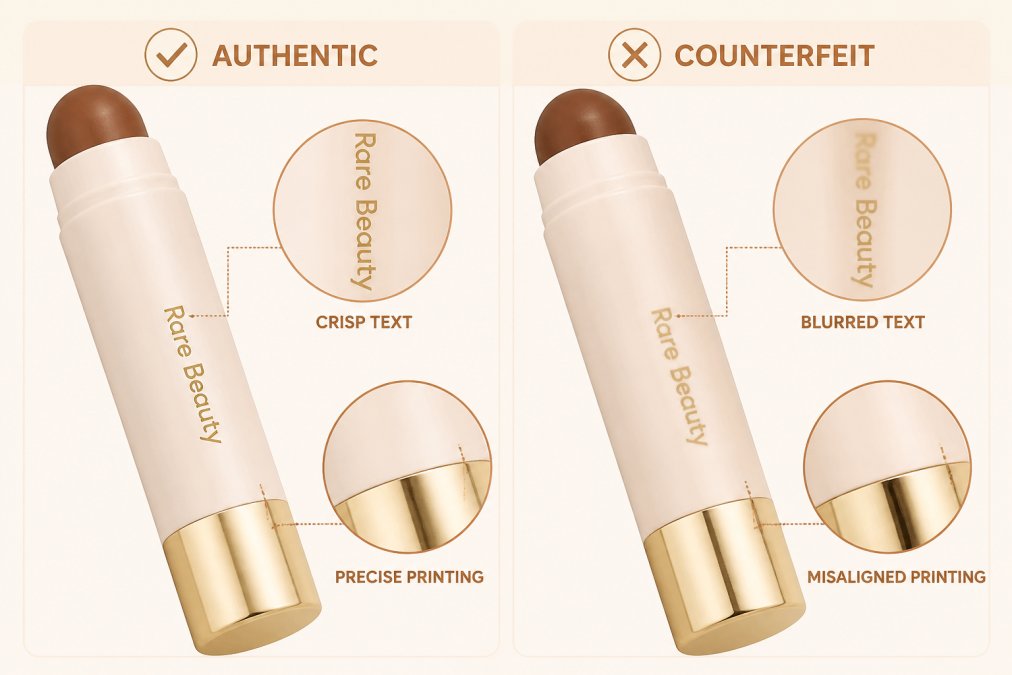
Authentic beauty products have crisp, consistent printing with precise colour registration. Fonts match the brand's guidelines exactly, and spacing remains uniform. Counterfeit packaging frequently shows blurry text, uneven ink application, and inconsistent letter spacing. Examine the fine print carefully, ingredient lists and batch codes on fake products often contain spelling errors or grammatical mistakes that legitimate brands would never allow.
Inspect packaging materials and seals
Authentic products use specific cardstock weights and finishes that match the brand's quality standards. Run your fingers across the box, does it feel sturdy and consistent, or flimsy and cheap?
Tamper-evident seals should sit flush against packaging with clean edges. Counterfeit seals may be slightly raised, misaligned, or made from inferior materials that don't adhere properly. Check for holographic elements or security stickers that premium brands use, these are expensive to replicate and often missing on fakes. All edges should be cleanly cut with no rough spots, and interior packaging should match the brand's standards.

Checking Batch Codes and Manufacturing Dates
Every cosmetic product carries a batch code and manufacturing date. Learning to locate and verify these codes is one of the most reliable ways to confirm authenticity.
How to locate batch codes on products
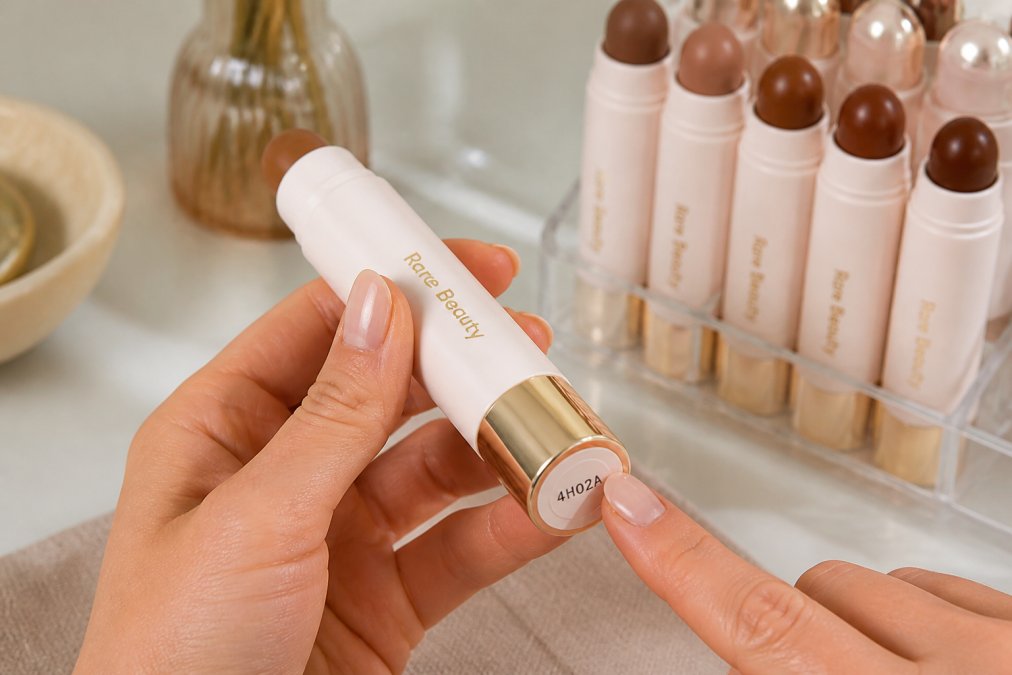
Batch codes appear in different locations depending on product type. On skincare jars, look at the bottom or back of the label. Liquid products often have codes on the side of the bottle or cap. Stick products usually display codes on the base or bottom edge. The code should be printed clearly and permanently, not applied as a removable sticker.
Manufacturing dates are sometimes printed separately. Look for symbols like an open jar icon with a number inside, indicating how many months the product is safe to use after opening. This "period after opening" (PAO) marking is a regulatory requirement on all legitimate cosmetics.
Using online batch code checkers
Many brands offer official batch code checkers on their websites. Enter your batch code to verify it matches their manufacturing records. If the checker returns "no results found," the product is almost certainly counterfeit. If your brand doesn't offer this service, contact their customer service directly with a photo of the batch code, legitimate brands respond to these inquiries.
The Dangers of Counterfeit Cosmetics
Counterfeit cosmetics are manufactured in unregulated facilities without quality control or safety testing. Many contain heavy metals like lead, cadmium, and mercury that accumulate in your body and cause neurological damage, kidney problems, and reproductive harm (peer-reviewed research).
Bacterial contamination is another significant danger. Counterfeit products stored in unsanitary conditions may contain pathogens like Staphylococcus aureus that cause infections ranging from minor folliculitis to serious cellulitis requiring medical treatment ([the UK Health Security Agency]([EXTERNAL_LINK: UK Health Security Agency guidance on bacterial infections | gov.uk/uk-health-security-agency])). Undisclosed ingredients pose additional risk; counterfeit skincare may contain prescription-strength actives without proper labelling or dosage guidance, causing severe irritation and long-term skin damage.
Digital Verification Methods: QR Codes and Serial Numbers
Modern cosmetics increasingly include digital verification tools. Scan the QR code on your product's packaging using your smartphone, this should direct you to the brand's official authentication page. If the QR code doesn't work or leads to a suspicious website, the product is likely counterfeit.
Some brands use NFC (near-field communication) technology embedded in packaging. Tapping your smartphone against the product activates verification and displays authenticity confirmation. Serial numbers function similarly to batch codes but are unique to individual units. Enter the serial number into the brand's verification system to confirm your specific product was manufactured legitimately.
Be cautious of QR codes linking to third-party authentication websites rather than the brand's official domain. Always check the URL to ensure you're on the genuine brand website.
Red Flags When Shopping Online
Suspiciously low prices and unauthorized retailers
If a product is priced significantly lower than the recommended retail price across multiple authorized retailers, investigate why. A 40-50% discount on premium skincare is unusual and warrants caution. Unauthorized retailers claiming "warehouse overstock" or "international versions" are frequently false, legitimate overstock is rare in cosmetics.
Check the retailer's return policy carefully. Authorized sellers offer hassle-free returns because they're confident in product authenticity. Read customer reviews specifically mentioning authenticity concerns. If multiple reviewers mention receiving counterfeit products, that's a strong indicator the seller is unreliable.
Third-party marketplaces and grey market risks
Third-party marketplaces create opportunities for counterfeiters. Even products with positive reviews can be counterfeit because sellers sometimes mix authentic and counterfeit stock. The "fulfilled by" designation matters, marketplace fulfillment offers some buyer protection, while third-party seller fulfillment carries higher risk.
Grey market products are authentic cosmetics sold outside official distribution channels. While not counterfeit, they may be expired, damaged, or formulated for different regions. Buying grey market means forgoing the brand's warranty and customer support.
Physical Testing: Formula, Smell, and Consistency
Once you've received your product, physical testing provides additional verification. Authentic cosmetics have consistent formulations, distinctive scents, and specific textures that counterfeiters struggle to replicate exactly.
Apply a small amount to the back of your hand and notice how it feels. Does it absorb quickly or sit on your skin? Fragrance and scent are difficult for counterfeiters to replicate perfectly. If your product smells noticeably different from previous purchases, that's a warning sign. Some counterfeit products smell chemical or off in ways authentic versions don't.
Colour consistency matters too. Authentic products have consistent colour batches within acceptable ranges. Test the product on a small area of skin first. If you experience unexpected irritation, redness, or burning sensations, discontinue use immediately and consider the product counterfeit.
Where to Buy Authentic Beauty Products Safely
Shopping from authorized retailers eliminates most counterfeiting risk. The brand's official website is always the safest option, you're guaranteed authentic products with full customer support and easy returns.
Authorized department stores and specialty beauty retailers maintain verification systems and stand behind their products. When shopping online, verify the retailer's authorization status directly with the brand. Most brands maintain a list of authorized online sellers on their websites.
Check the retailer's physical presence and business credentials. Legitimate retailers have verifiable contact information, physical addresses, and transparent business practices. Look for security certifications on retailer websites indicating SSL encryption and verified payment processing.
| Retailer Type | Authentication Level | Risk Level | Best For |
|---|---|---|---|
| Brand's Official Website | Highest | Lowest | Maximum security and selection |
| Authorized Department Stores | High | Low | Wide product range with verification |
| Specialty Beauty Retailers | High | Low | Curated selections with authentication |
| Authorized Online Retailers | High | Low | Convenience with brand verification |
| Third-Party Marketplaces | Medium | Medium | Price comparison with caution |
| Grey Market Sellers | Low | High | Not recommended |
Verifying authentic beauty products requires attention to detail but becomes intuitive with practice. Start by checking packaging quality and print consistency, then verify batch codes through official brand systems. Digital verification tools like QR codes add another layer of confirmation, and physical testing provides final assurance before use.
The effort invested in authentication pays dividends through healthier skin, better results, and peace of mind knowing you're using genuine products. At virelle beauty, we've curated our entire collection with this same rigour, every product is verified for authenticity before it reaches your door, backed by free UK shipping on orders over £30. When you shop with intentional retailers who prioritise verification, you eliminate the guesswork and protect your skin from counterfeit risks.
Frequently Asked Questions
How can I check if a beauty product is original using batch codes?
Batch codes are printed on most cosmetics and indicate manufacturing date and location. Find the code on the product's bottom or back, then enter it into the brand's official verification database or use a dedicated cosmetic batch code checker tool. Match the manufacturing date to the product's age, if the batch code is from several years ago but the product appears new, it may be counterfeit or expired stock. Always verify through the brand's official website for accuracy.
What are the dangers of counterfeit cosmetics?
Counterfeit cosmetics often contain harmful synthetic ingredients, heavy metals, or banned substances that can cause allergic reactions, dermatitis, and skin damage. Fake products lack quality control and regulatory compliance, posing serious health risks. Some counterfeits contain ingredients banned under UK cosmetic safety standards. Using fake beauty products can result in persistent skin irritation, infection, or systemic toxicity. Always purchase from authorised retailers to protect your health and ensure product safety.
How do I spot fake skincare packaging?
Examine print quality, font consistency, and colour accuracy on the packaging. Authentic products have crisp, professional printing with correct spelling and grammar. Check for tamper-evident seals, holographic elements, or security features specific to the brand. Compare the packaging to images on the brand's official website. Counterfeit packaging often has blurry text, misaligned labels, or poor-quality materials. Inspect the barcode and serial number for correct formatting and alignment.
Is it safe to buy beauty products from third-party marketplaces?
Third-party marketplaces carry higher counterfeit risk because sellers may source from grey market or unauthorised distributors. Always verify the seller's credentials and check if they're an official brand partner. Look for tamper-evident seals and request proof of authenticity. Authorised retailers and direct brand websites offer greater protection and product guarantees. If buying from a marketplace, review seller ratings, check return policies, and inspect products immediately upon arrival for signs of tampering or counterfeiting.
This article was written using GrandRanker
0 comments