

Table of Contents
- LookFantastic vs Independent Beauty Retailers: At a Glance
- Why the Independent Experience Wins for Curation
- How to Identify Authentic Skincare Retailers You Can Trust
- The Real Benefits of Shopping Small Beauty for Your Routine
- Customer Service, Shipping, and Post-Purchase Support Compared
- Pricing, Discounts, and Loyalty: The True Cost of Your Basket
- Which Retailer Should You Choose?
- Frequently Asked Questions
Last Updated: September 6, 2026
LookFantastic vs Independent Beauty Retailers: At a Glance
Choosing between a large beauty retailer and independent beauty retailers often feels like a trade-off between convenience and care. Large platforms offer vast catalogues and frequent discount codes, while smaller shops promise a curated selection and a more personal customer experience. This guide breaks down where each model truly excels, so you can decide which deserves your next order.
Independent beauty retailers are businesses that operate on a smaller scale than mass-market chains, typically curating their product range rather than stocking thousands of brands. The core difference comes down to intent: a large retailer moves volume, while an independent retailer builds a point of view. If you value product discovery guided by expertise over endless scrolling, the independent model usually delivers a more satisfying shopping experience.
Below, we compare curation, authenticity, customer service, shipping, pricing, and loyalty across both models. You will see exactly what you gain and what you give up with each approach.
Why the Independent Experience Wins for Curation
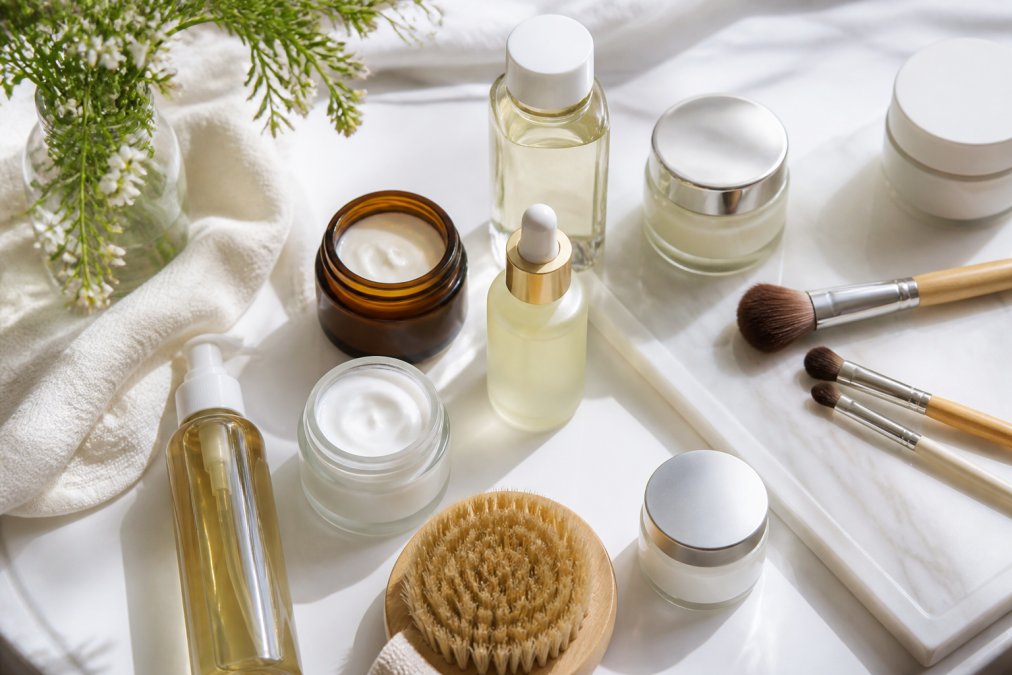
A curated selection beats a mass-market catalogue when your goal is finding products that genuinely work for your skin or hair. Large retailers stock thousands of items to capture every possible buyer, which means you wade through countless formulations that duplicate each other or contain unnecessary fillers. Independent beauty retailers typically choose each product because it meets a specific standard, saving you the research time and reducing the risk of a disappointing purchase.
The practical benefit is visible the moment you browse. A smaller range means every product has earned its place, often because the retailer has tested it or understands the ingredient story behind it.
How to Identify Authentic Skincare Retailers You Can Trust
Authenticity begins with transparency about sourcing and stock. An authentic skincare retailer will state clearly whether it is an authorized retailer for the brands it sells, and it will provide contact details that lead to a real human rather than an automated inbox. Check for a physical address, a working phone line, and straightforward answers to questions about product authenticity and storage.
Product authenticity also shows up in the details. Look for batch codes on packaging, accurate ingredient lists, and descriptions that match the manufacturer's official information. A retailer that cannot confirm how it sources a premium beauty product should raise a red flag, as counterfeit goods remain a concern in online beauty. Consumer protection rules require businesses to describe goods accurately, and an independent retailer's reputation depends on getting this right (guidance from the Competition and Markets Authority(https://www.gov.uk/government/collections/cma-consumer-enforcement-guidance)).
The Real Benefits of Shopping Small Beauty for Your Routine
Shopping small beauty means your feedback actually shapes what gets stocked. Independent retailers listen to their customers and adjust their range accordingly, so you are more likely to find products suited to sensitive skin, hair thinning, or scalp irritation than on a platform chasing broad trends.
Another benefit is the focus on ethical beauty and sustainability initiatives. Smaller operations often prioritise brands with transparent supply chains and responsible packaging, because their customers demand it. They also tend to offer better beauty advice, since the people answering your questions are usually the same people who selected the products.
Customer Service, Shipping, and Post-Purchase Support Compared
The difference between a large retailer and an independent becomes most visible when something goes wrong. The question isn't whether issues occur, it's how each model responds when they do.
The Claims Process: Automated Triage vs. Human Judgement
Large platforms typically route every complaint through a ticketing system. You submit a form, receive an automated acknowledgement, and wait for a tier-one agent to read from a script. If a product arrives damaged, the default response is often a return label and a refund, efficient, but impersonal, and it rarely addresses why the damage happened in the first place.
Independent beauty retailers operate differently. Because the team handling your email is often the same team that packed your order, they can diagnose the problem at its source. A common pattern is that an independent will ask for a photo of the damage, confirm the packaging fault, and offer a replacement dispatched the same day, without requiring you to repackage and ship back the damaged item.
The Damaged Goods Protocol: What Actually Happens
Consider a broken pressed powder. A large retailer's automated system will likely process a refund or replacement based on a photo, but the decision is binary: is it damaged or not? An independent retailer, by contrast, can apply judgement. If the powder arrived shattered due to inadequate packaging, they will fix the packaging for future orders. If it arrived intact but crumbled on first use, they might ask about storage conditions or batch codes, information that feeds back to the brand.
Shipping: Tracked, Insured, and Personalised
Shipping reliability varies more by individual retailer than by size, but independents often use tracked couriers and take extra care with packaging to prevent damage. Look for clear order fulfillment timelines before you buy. A retailer that offers free UK shipping on orders over a modest threshold signals confidence in its pricing.
The Post-Purchase Conversation
The most underappreciated difference is the post-purchase conversation. After your order arrives, a large retailer's engagement ends until they want to sell you something else. An independent retailer often follows up, not with a generic 'review your purchase' email, but with a genuine check-in: did the product perform as expected? Is your skin reacting well? It is also the channel through which you can report a product that didn't work for you, and receive a personalised alternative recommendation rather than a refund form.
| Feature | Large Retailer | Independent Retailer |
|---|---|---|
| Issue intake | Automated ticket system | Direct email to a human |
| Damage resolution | Return label + refund | Photo check + immediate replacement |
| Feedback loop | None, issue is closed | Fed back to brand and buying decisions |
| Post-purchase contact | Promotional only | Personal check-in and advice |
| Packaging care | Standardised | Often bespoke, damage-resistant |
This is where the 'care' in the independent model becomes tangible.
Pricing, Discounts, and Loyalty: The True Cost of Your Basket
The pricing conversation between large retailers and independents is rarely a straight comparison of like-for-like prices. It is a comparison of two different economic models, and understanding the mechanics reveals why the cheapest upfront price is not always the cheapest true cost.
The Discount Cycle: How Large Retailers Engineer Urgency
Large beauty platforms operate on a continuous promotional cycle. A product is listed at a reference price, then 'reduced' by 20-30% during a sale event that runs for a limited window. This creates urgency, but it also trains customers to never buy at full price. The reference price becomes fictional, a psychological anchor that makes the discounted price feel like a win.
The mechanism behind this is straightforward: brands set a recommended retail price (RRP), and large retailers buy in such volume that they can absorb deeper discounts. But those discounts are not free money; they are funded by the margin built into the RRP.
Independent Pricing: Authorised Sourcing and Fair Margins
Independent beauty retailers typically cannot, and often will not, match the discount depth of mass-market platforms. This is not a failure of competitiveness; it is a consequence of sourcing. An independent that is an authorised retailer buys through official distribution channels at standard trade prices. They do not have access to the grey-market stock that sometimes fuels deep discounts elsewhere.
This is where supply chain transparency becomes a pricing issue. When you see a premium skincare product discounted by 40% on a large platform, ask yourself how that price is possible. The answer is sometimes legitimate volume purchasing, but it can also be grey-market stock: genuine products diverted from other regions, expired batches, or items that have been stored improperly. Consumer protection rules require businesses to describe goods accurately, but they do not require disclosure of the supply chain.
The True Cost Calculation
A fair pricing comparison must account for what you are actually buying. A £30 serum from an independent that is an authorised retailer, stored correctly, and fresh from the manufacturer is not the same product as a £22 serum from a grey-market source that may have sat in a warm warehouse for eighteen months. The active ingredients in many skincare formulations degrade with heat and time (research on ingredient stability(https://pmc.ncbi.nlm.nih.gov/articles/PMC10385838/)).
Loyalty Beyond Points
Customer loyalty works differently at this scale. Instead of generic points schemes, independents reward repeat customers with genuine perks, early access to new launches, and recommendations based on your purchase history. The true cost of your basket is not just the price tag, but whether every product earns its place in your routine.
The Loyalty Mechanism That Matters
Large retailers offer points that convert to vouchers, a system that encourages further spending. Independents often offer something more valuable: a memory of your preferences. When you reorder a product, the retailer knows your history and can flag when a formulation has changed or suggest a better alternative based on your skin's response.
Which Retailer Should You Choose?
Choose a large platform when you want maximum choice, next-day delivery, and don't mind researching products yourself. Choose independent beauty retailers when you want a trusted edit, informed guidance, and products selected for visible results rather than mass appeal.
For a shopping experience built on intentional curation, virelle beauty offers a refined collection of skincare, hair care, and styling tools chosen for authentic results without fillers or false promises. Every product earns its place, from the Gift Bag Of 24 Pcs Makeup Brush Sets at £14.99 to the Electric Make-up Brush Cleaner at £39.99, with free UK shipping on orders over £30.


Frequently Asked Questions
Do LookFantastic sell genuine products?
Yes, LookFantastic is an authorized retailer, so the products they sell are genuine. The concern for some shoppers is less about authenticity and more about the mass-market approach. When you buy from a large platform, your order is one of thousands processed daily. Independent beauty retailers often provide a more detailed product selection and a higher level of customer service.
Why is LookFantastic so cheap?
LookFantastic can offer lower prices because they buy in massive volumes and operate a global distribution network, which reduces their per-unit costs. This often comes with frequent discount codes and promotional offers. Independent retailers, by contrast, focus on a curated selection rather than a mass-market catalogue. Their prices reflect the time spent on product discovery and the personalized service they offer.
What are the benefits of shopping with independent beauty retailers?
Shopping with independent beauty retailers gives you access to a curated selection chosen by people who understand the products deeply. You get personalized recommendations, a focus on ethical beauty and sustainability initiatives, and a level of customer loyalty that feels genuine.
How do I know if an online beauty retailer is authentic?
Check if the retailer is an authorized distributor for the brands they stock, as this is the best guarantee of product authenticity. Look for clear contact information, a physical address, and transparent return processing policies. Authentic retailers, whether large or small, will be open about their supply chains. For independent shops, examine their curation philosophy and whether they provide detailed, honest product descriptions rather than just marketing copy.
Is it worth paying more for products from an independent beauty retailer?
You are often paying for a more thoughtful service and a tighter edit of products, not just the same items with a markup. Independent retailers typically vet every product for quality and ingredient transparency. This curation is a key benefit if you value a purposeful routine and want to avoid the guesswork of browsing a vast, impersonal catalogue.
The real question is not which retailer is bigger, but which one respects your routine enough to curate it properly. If you are tired of over-promised results and want beauty that actually works, virelle beauty provides an intentional selection with visible benefits. Get started with virelle beauty and build a regimen that feels purposeful and effective.
0 comments