

Table of Contents
- How Sephora UK and Curated Beauty Retailers Differ
- Product Curation and Brand Portfolio
- Pricing, Margins and Value Proposition
- Shopping Experience: In-Store vs Online
- Benefits of Curated Skincare Shopping
- How to Build a Beauty Routine with Niche Brands
- Customer Loyalty, Support and Retail Compliance
- Which Retailer Suits Your Beauty Needs
Last Updated: August 17, 2026
How Sephora UK and Curated Beauty Retailers Differ
Sephora UK operates as a mass-market beauty distribution giant, stocking thousands of brands across every price point and category. Curated beauty retailers apply editorial judgment to their selection, choosing fewer brands with greater intentionality. This difference shapes everything from product discovery to pricing to the shopping experience itself.
At virelle beauty, we've observed that consumers increasingly split their shopping between these two models. Some value the comprehensive selection and accessibility of Sephora; others prefer the refined curation that curated beauty retailers offer, where every product has been vetted for efficacy and ingredient transparency. Understanding these distinctions helps you choose the retailer that matches your beauty priorities.
Product Curation and Brand Portfolio
Sephora UK stocks approximately 15,000 products across 1,500+ brands, ranging from mass-market drugstore labels to luxury prestige brands. If a brand exists in the UK beauty market, Sephora likely carries it.
Curated beauty retailers operate with a fundamentally different philosophy. Rather than stocking everything available, they apply editorial criteria to their selection. A curated retailer might carry 200-500 brands, chosen specifically for ingredient quality, efficacy, brand values, or product innovation. This means fewer options but higher confidence in what you're buying.
The practical difference becomes clear when shopping for skincare. At Sephora UK, you might find 50 moisturisers across 40 different brands. A curated beauty retailer might stock 8-12 moisturisers, each selected because it delivers measurable results without fillers or misleading claims.
Curated retailers often carry smaller, independent, or emerging brands that haven't secured mass-market distribution. If you're seeking niche skincare brands, clean beauty labels, or specialist haircare lines, you're more likely to find them through curated retailers than through Sephora.
Pricing, Margins and Value Proposition
Sephora UK's pricing reflects its mass-market positioning, carrying products at every price point from budget-friendly drugstore brands (£3-8 per item) to luxury prestige products (£40-150+). Because Sephora negotiates volume discounts with major brands, it can offer competitive pricing on popular items.
Curated beauty retailers typically position themselves at a different price tier. Because they stock fewer items and apply editorial criteria, their average product price tends to be higher. A curated retailer might specialise in premium skincare (£25-80 per product) or niche indie brands that command higher prices due to smaller production runs.
Free UK shipping on orders over £30, a benefit offered by retailers like virelle beauty, shifts the value equation. When shipping is free above a modest threshold, the effective cost of purchasing from a curated retailer becomes competitive with Sephora's in-store experience.
The real pricing question isn't "which is cheaper" but "which offers better value per pound spent." A £45 moisturiser from a curated retailer that delivers visible results may represent better value than a £25 moisturiser from Sephora that requires constant repurchasing because it doesn't work for your skin.
Shopping Experience: In-Store vs Online
Sephora UK's in-store experience is designed for product exploration. Testers are available for most products, allowing you to swatch colours, test textures, and assess how products feel on your skin before purchasing. The physical space encourages browsing and impulse discovery.
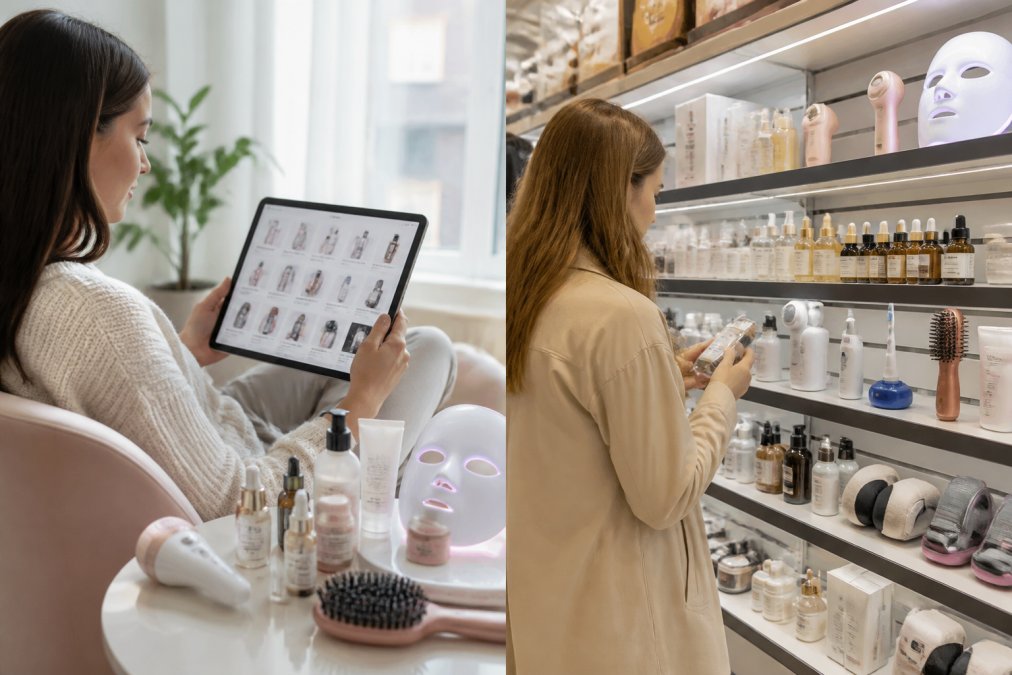
Curated retailers typically operate primarily online. Without testers, they invest heavily in product descriptions, ingredient transparency, and educational content. Many provide detailed skincare guides, ingredient breakdowns, and usage instructions to help customers make informed decisions without touching products first.
You lose the tactile discovery of in-store shopping but gain the convenience of home delivery and often more detailed product information. Sephora UK's omnichannel strategy integrates online and in-store, allowing you to order online and collect in-store or return online purchases. Curated retailers, being primarily online, excel at fast delivery and seamless digital experience but can't replicate the immediate gratification of in-store purchase.
Benefits of Curated Skincare Shopping
Curated skincare shopping addresses a specific consumer frustration: the difficulty of finding genuinely effective products in a market saturated with overpromising brands. When you shop through a curated retailer, you're purchasing products that have been vetted for ingredient quality and efficacy claims.
The first benefit is ingredient transparency. Curated retailers typically stock brands that disclose their full ingredient lists prominently, avoid fillers, and make realistic claims about what their products can achieve.
The second benefit is time savings. Rather than researching 50 moisturiser options, you're evaluating 8-12 curated choices. This reduction in decision fatigue accelerates the decision-making process when addressing a specific skin concern.
The third benefit is community and education. Many curated beauty retailers invest in content that helps customers understand their skin type, ingredient function, and how to build effective routines. This educational approach transforms shopping from transactional to purposeful.
Curated retailers also tend to support smaller brands and indie creators. If you value supporting emerging beauty entrepreneurs or prefer niche brands that haven't achieved mass-market distribution, curated retailers are where you'll find them.
Finally, curated skincare shopping reduces the risk of purchasing products that don't work for your specific skin needs. Because the selection is smaller and more intentional, you're more likely to find products formulated for your particular concern.
How to Build a Beauty Routine with Niche Brands
Building an effective beauty routine with niche brands requires starting with your skin concerns and ingredient preferences rather than brand names you recognise.
The first step is identifying your skin type and primary concerns. Niche brands often specialise in specific concerns rather than trying to be everything to everyone. A brand might focus exclusively on sensitive skin, scalp health, or clean beauty formulations.
The second step is researching ingredient profiles. Niche brands typically publish detailed ingredient information because ingredient transparency is part of their brand positioning. Learn which ingredients address your specific concerns, such as niacinamide for pore health or ceramides for barrier repair.
The third step is starting with a minimal routine. Rather than purchasing a complete skincare line, begin with essentials: cleanser, treatment product, and moisturiser. This approach lets you assess how each product performs on your skin before expanding.
Building a routine with niche brands requires patience. Because these products often contain active ingredients or specialised formulations, your skin may need 4-8 weeks to adjust. Niche brands prioritise visible, long-term results over immediate feel-good sensations.
A practical approach: select one niche brand for skincare and one for haircare or body care. This prevents overwhelming yourself while still experiencing the benefits of curated, specialist products.
Customer Loyalty, Support and Retail Compliance
Sephora UK operates a loyalty programme (Beauty Insider) that rewards purchases with points, early access to sales, and exclusive products. This gamification approach drives engagement and retention.
Curated beauty retailers typically offer different loyalty models. Some operate membership programmes focused on exclusive access or discounts. Others emphasise community engagement through content and education. The loyalty approach reflects the retailer's positioning: mass retailers reward spending; curated retailers reward engagement.
Customer support quality varies significantly. Sephora UK's support operates at scale with standardised responses. Curated retailers often provide more personalised support, with teams that can discuss specific product recommendations in detail.
Retail compliance and consumer protection are consistent across both models in the UK market. Both must comply with regulations governing product claims, ingredient disclosure, and consumer rights. The Consumer Rights Act 2015 provides identical protections regardless of where you purchase beauty products.
Product authenticity is worth considering. Sephora UK guarantees product authenticity as an authorised distributor. Reputable curated retailers source directly from brands or authorised distributors. Return and refund policies differ; Sephora UK allows returns within 60 days, while curated retailers vary. Because skincare requires time to assess effectiveness, a longer return window is genuinely valuable.
Which Retailer Suits Your Beauty Needs
The choice between Sephora UK and curated beauty retailers depends on your specific shopping priorities and beauty philosophy.
Choose Sephora UK if you value comprehensive selection, enjoy in-store exploration, want to compare multiple brands side by side, or prefer established mass-market brands.
Choose a curated beauty retailer if you prioritise ingredient transparency, want editorial guidance on product selection, prefer niche or emerging brands, or value education alongside purchasing.
For many consumers, the answer is both-and. You might use Sephora UK for makeup discovery and mass-market haircare, while sourcing specialist skincare from a curated retailer.
virelle beauty serves customers seeking curated skincare and haircare with ingredient transparency and visible results. The selection is intentional rather than exhaustive, free UK shipping on orders over £30 removes friction, and the product curation reflects a commitment to efficacy over trends.
| Consideration | Sephora UK | Curated Beauty Retailers |
|---|---|---|
| Product Selection | 15,000+ products across 1,500+ brands | 200-500 carefully chosen products |
| Pricing Range | Budget to luxury (£3-150+) | Typically premium (£25-100+) |
| Shopping Experience | In-store testers, physical browsing | Online-first, detailed product info |
| Brand Discovery | Established and emerging brands | Niche, indie, specialist brands |
| Ingredient Transparency | Varies by brand | Consistently high |
| Loyalty Programme | Points-based Beauty Insider | Often education-focused or membership |
| Shipping | Variable | Often free above £30 threshold |
| Customer Support | Scale-based, standardised | Often more personalised |
The beauty retail landscape has fragmented because different customers want fundamentally different things. Sephora UK serves those seeking breadth, convenience, and established brands. Curated beauty retailers serve those seeking depth, intentionality, and products chosen specifically for efficacy. Your choice should align with whether you value discovery across thousands of options or confidence in a carefully curated selection. For customers who've experienced the frustration of purchasing products that underperform or contain unnecessary fillers, curated beauty retailers offer a meaningful alternative. Explore both, observe which aligns with your shopping values, and build your routine accordingly.
Frequently Asked Questions
What makes curated beauty retailers different from Sephora UK?
Curated beauty retailers focus on hand-picked product selections, often emphasising niche, indie, and clean beauty brands rather than mass-market options. Unlike Sephora's broad inventory across drugstore and luxury categories, curated retailers typically feature fewer but more intentionally chosen brands, with deeper expertise on ingredient transparency and efficacy. This focused approach means you're shopping from a vetted collection rather than navigating thousands of SKUs.
Are curated beauty retailers more expensive than Sephora UK?
Not necessarily. While some curated retailers position themselves as premium, many offer competitive pricing on niche brands you cannot find elsewhere. The difference lies in what you're paying for: specialised curation, ingredient transparency, and often superior customer service. Many curated retailers offer free shipping thresholds (like orders over £30) and loyalty schemes that rival Sephora's rewards programmes. Compare specific products you want rather than assuming curated equals costlier.
How do I know which retailer has the brands I actually want?
Start by identifying 3-5 brands you trust or want to try. Search for them across retailers to see where they're stocked. Sephora UK carries mainstream and prestige brands with broad availability. Curated retailers often specialise in specific beauty categories (skincare, haircare, colour cosmetics) or brand philosophies (clean beauty, indie brands, dermatologist-recommended). Check each retailer's brand partnerships and read customer reviews about product authenticity and condition on arrival.
What should I consider when building a beauty routine with niche brands?
Start with one category (skincare or haircare) and commit to 4-6 weeks before adding more products. Niche brands often require patience to show results, especially clean or ingredient-focused formulas. Prioritise ingredient compatibility: if you have sensitive skin, check for irritants across your routine. Read ingredient lists, not just marketing claims. Many curated retailers provide detailed product descriptions and compatibility guides. Begin with a cleanser and moisturiser, then layer in targeted treatments based on your specific concerns.
This article was written using GrandRanker
0 comments