

Table of Contents
- Why Lookfantastic Shoppers Are Switching to Curated Beauty Retailers
- What Defines a Curated Beauty Retailer?
- The Best Lookfantastic Alternatives for Curated Beauty in 2026
- Curated Skincare Brands for Visible Results
- How to Build a Purposeful Skincare Routine
- What to Look For in a Curated Beauty Retailer
- The Verdict: Finding Your Ideal Beauty Edit
- Frequently Asked Questions
Last Updated: September 7, 2026
Why Lookfantastic Shoppers Are Switching to Curated Beauty Retailers
The endless scroll of thousands of near-identical products leaves many shoppers overwhelmed. A curated beauty edit removes that friction by presenting only products that meet a specific standard, saving time and reducing the risk of a disappointing purchase.
This guide from virelle beauty explores what separates a true curated beauty retailer from a standard marketplace, examining the criteria that define genuine curation and how to identify a source aligned with your values around ingredient transparency and visible results.
Many shoppers are also questioning loyalty programmes and subscription boxes that prioritise volume over efficacy, with the appeal of a smaller, more thoughtful range growing among those who view skincare as a daily ritual rather than constant experimentation.
What Defines a Curated Beauty Retailer?
A curated beauty retailer selects a limited range of products based on criteria such as ingredient quality, ethical sourcing, or demonstrated efficacy, rather than offering an exhaustive catalogue. The curation itself is the service, saving the consumer hours of research and protecting them from marketing hype.
The distinction from a mass-market platform comes down to a few key factors:
- Selection philosophy: Products are chosen for a reason, often aligning with a clear brand ethos or a specific skin concern.
- Ingredient transparency: Clear communication about what is inside the formula and, just as importantly, what has been left out.
- Product range: A focus on depth over breadth, featuring full-size products and specialist tools that serve a defined purpose.
This contrasts sharply with the retailer comparison model, where sheer volume dilutes trust. A curated edit builds confidence through restraint.
The Best Lookfantastic Alternatives for Curated Beauty in 2026
Finding the right alternative depends on what you value most: medical-grade skincare, a specific brand portfolio, or a strong ethical framework.
Virelle Beauty: A Focus on Purposeful, Results-Driven Rituals
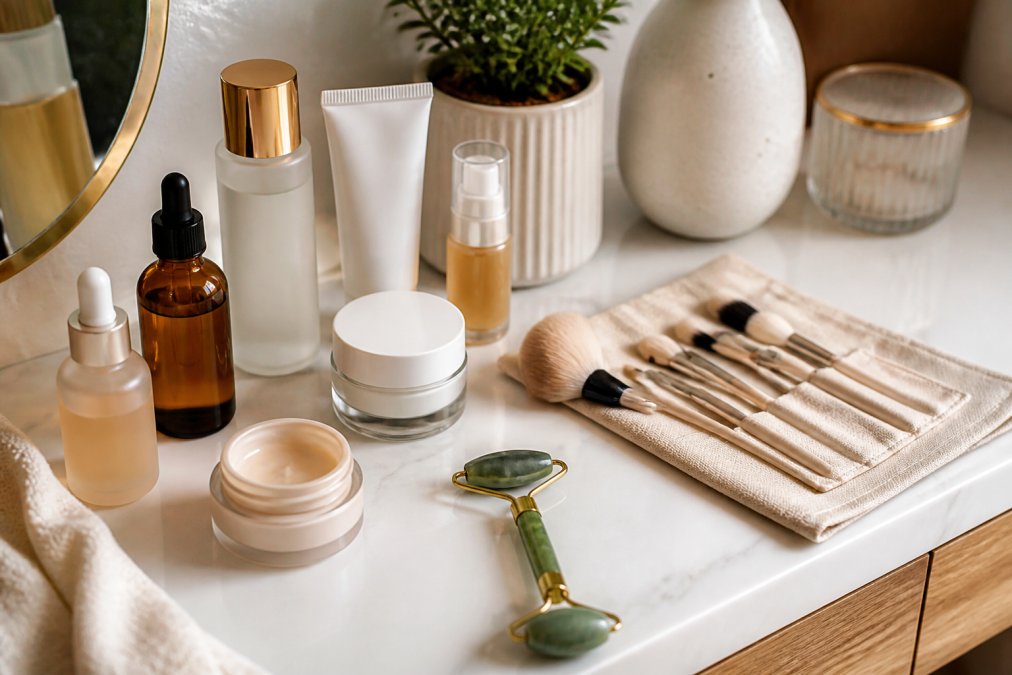
For those seeking a curated beauty experience that prioritises tangible outcomes over fleeting trends, virelle beauty stands out. The selection is built on a clear principle: no fillers, no false promises, and carefully chosen products for real results, offering a refined collection of skincare, hair care, and styling tools that transform a daily regimen into a meaningful ritual.
The focus is on purposeful self-care. Each product, from a Beauty Face Care Massage Jade Device designed to improve elasticity and reduce puffiness to an Led Facial beauty instrument targeting specific skin concerns with different light wavelengths, is intended to deliver visible, authentic results. For those building a routine from scratch, the 12 Tin Box Makeup Brush Sets offer a complete, portable solution, while the Gift Bag Of 24 Pcs Makeup Brush Sets provide a more comprehensive professional toolkit. Orders over £30 benefit from free UK shipping, making it practical to invest in a full ritual.


Navigating the Independent Retailer Landscape
Beyond specialist brands, several independent retailers offer a broader but still curated selection, often excelling in niches such as medical-grade skincare or a hand-picked global brand portfolio, providing an alternative to dominant marketplaces through a focus on customer experience and personal support.
However, with a wider range comes less strict curation, and the onus falls back on the consumer to determine product suitability. While excellent for discovering new brands, they may not offer the same guidance in building a coherent routine.
| Retailer Type | Selection Focus | Best For | Potential Drawback |
|---|---|---|---|
| Purposeful Edit (e.g., virelle beauty) | Results-driven tools and formulas | Building a coherent ritual | Smaller overall catalogue |
| Broad Independent | Niche brands and medical-grade lines | Discovering specific new products | Less routine guidance |
| Mass-Market Platform | High volume, all categories | Price comparison and choice | Overwhelming, less trustworthy |
Curated Skincare Brands for Visible Results
Visible results are the core test for any curated skincare brand. The real measure is whether the formulation contains active ingredients at effective concentrations, without fillers that dilute potency or cause irritation, focusing on formulas for specific concerns like hair thinning, scalp irritation, or reactive skin.
For sensitive skin, the fear of a reaction is a significant barrier. A curated edit mitigates this risk by featuring brands that prioritise ingredient transparency and avoid common irritants, building trust through product authenticity and clear explanations of how each ingredient contributes to the outcome.
How to Build a Purposeful Skincare Routine
Building a purposeful skincare routine requires shifting from buying on hype to selecting products for their role in a coherent strategy. Start by identifying your primary concern, dehydration, dullness, or sensitivity, and ensure every product serves that goal.
The Layering Logic: Why Order Matters
A common mistake is applying products in the wrong order, rendering expensive actives ineffective. The general rule is to layer from thinnest to thickest consistency, with exceptions based on formulation chemistry. A practical sequence is:
- Assess your skin's needs: Identify your main concern, whether it is sensitivity, congestion, or loss of firmness. Be specific. "Dullness" could mean dehydration, lack of exfoliation, or oxidative stress, and each requires a different active.
- Choose a core cleanser and moisturiser: These form the foundation of any routine and should be gentle and effective. Look for a pH-balanced cleanser (around 5.5) that does not strip the skin barrier, and a moisturiser with ceramides or squalane to support barrier function (peer-reviewed research).
- Add a targeted treatment serum: Select one active serum that addresses your primary concern. For dehydration, look for hyaluronic acid or glycerin. For congestion, consider a salicylic acid or niacinamide formula. For loss of firmness, a peptide or retinol serum is the standard choice (PubMed). Introduce only one new active at a time, and wait at least two weeks before adding another.
- Incorporate supporting tools with a purpose: Tools should not be an afterthought. A jade roller or gua sha stone is best used in the morning to reduce puffiness and promote lymphatic drainage before applying serum. An LED device, such as a red-light panel for collagen support or a blue-light setting for blemish-prone skin, should be used on clean, dry skin before serums, as the light needs to penetrate without an oil barrier. A professional brush set is for makeup application, not skincare, but it completes the ritual by ensuring even, hygienic product distribution.
- Evaluate and adjust with a skin cycling approach: Give your skin time to adapt. A common pattern is to use an exfoliating acid on night one, a retinoid on night two, and then two to three nights of recovery with only cleanser, moisturiser, and barrier-supporting ingredients (the American Academy of Dermatology). This cycling method reduces irritation while still delivering the benefits of both actives.
Troubleshooting Common Routine Failures
A routine fails for one of three reasons, and identifying which one is key to fixing it:
- Over-exfoliation: If your skin feels tight, looks shiny, or stings on contact with water, you are likely using too many exfoliating acids or using them too frequently. Strip back to just cleanser, moisturiser, and SPF for a week.
- Product incompatibility: Some ingredients cancel each other out. For example, using a copper peptide serum at the same time as a vitamin C serum or an acid can degrade the peptide's efficacy. Separate these by at least 30 minutes, or use the peptide in the morning and the acid at night.
- Incorrect tool usage: Using a jade roller on dry skin can cause friction and micro-tears. Always apply a facial oil or a hydrating serum first to allow the tool to glide smoothly. Similarly, using an LED device for longer than the manufacturer's recommended session time does not increase efficacy; it simply wastes time and can cause dryness.
The Maintenance Mindset
A purposeful routine is not static; it should shift with the seasons, stress levels, and age. In winter you may need a heavier moisturiser; in summer, a gel cleanser. Evaluate your routine quarterly, not daily, daily tweaking leads to chaos.
This methodical approach is the antithesis of the "more is better" mentality, encouraging a slower, more considered relationship with beauty where each step feels intentional, resulting in a routine that is easier to maintain and more likely to deliver visible benefits.
What to Look For in a Curated Beauty Retailer
When evaluating a curated beauty retailer, delivery speed and return policies are only the starting point. The most useful comparison weighs how each retailer performs against values that shape your long-term satisfaction, moving beyond surface-level features to the operational details that separate a genuine edit from a rebranded marketplace.
The Decision Matrix: Five Filters Beyond Price
1. Sustainability and Ethical Sourcing
Most retailer comparisons ignore this, yet it is often the deciding factor for principled shoppers. Ask three specific questions:
- Packaging audit: Does the retailer state a clear policy on recyclable or refillable packaging? Look for brands that publish their packaging breakdown, such as the percentage of PCR (post-consumer recycled) material used.
- Cruelty-free and vegan verification: Is the claim backed by a recognised certification, such as the Leaping Bunny programme or the Vegan Society trademark, rather than a self-declared label?
- Carbon and shipping footprint: Does the retailer offer carbon-neutral delivery options or consolidate shipments to reduce waste? A curated retailer with a smaller footprint often ships less frequently but in more thoughtful, protective packaging.
A curated edit that genuinely values sustainability will make this information easy to find, not buried in a terms-and-conditions page. If the retailer cannot articulate its sourcing standards, that silence is itself a signal.
2. Personalisation Algorithms vs. Static Categories
The gap between a true curated experience and a simple category page is how well the platform adapts to you. Leading retailers use diagnostic quizzes or skin-profile tools that feed into a recommendation engine, the question is whether that engine is skin-typed or merely preference-based.
A skin-typed algorithm asks about concerns like dehydration or sensitivity and filters by ingredient compatibility. A preference-based system tracks what you clicked before, trapping you in a loop of the same product types. Complete a retailer's quiz twice with different answers; if recommendations barely change, the personalisation is superficial.
3. Community Reviews vs. Expert Curation
The authenticity of user-generated content is a growing concern, as mass-market platforms are flooded with incentivised reviews. A curated retailer should offer a clear hierarchy of trust:
- Expert editorial reviews that explain why a product was selected, including the mechanism of action for key ingredients.
- Verified purchaser reviews that are tied to a confirmed order and include usage context, such as skin type and duration of use.
- Community Q&A sections where staff or brand founders respond directly to specific concerns.
If a retailer only displays star ratings without any editorial rationale, the curation is likely just a merchandising decision, not a formulation standard.
4. Ingredient Transparency and Formulation Logic
Look for retailers that explain the why behind a formula, not just what is in a product, but what has been deliberately excluded and why. A serum might exclude fragrance because it is a common contact allergen that can compromise the skin barrier, indicating dermatological reasoning rather than marketing margins.
5. Returns and Refund Policies as a Trust Signal
The most confident curated retailers offer a longer trial period, such as 30 or 60 days, because they trust the product to perform. A short 14-day window suggests less certainty. Check whether the policy covers opened products, accepting returns on gently used items demonstrates a genuine commitment to finding the right fit.
This framework shifts the conversation from "which retailer has more brands" to "which retailer understands my values and my skin." That distinction is the essence of true curation.
The Verdict: Finding Your Ideal Beauty Edit
The search for a lookfantastic alternative for curated beauty comes down to your personal priorities. If you value a vast, browsable catalogue and frequent promotions, a large marketplace will always have its place. But if you seek a more deliberate, effective, and trustworthy relationship with your beauty products, a curated edit is the better path.
For those ready to move beyond the endless scroll, virelle beauty offers a refined collection built on transparency and visible results, with products chosen to work together, supported by free UK shipping on orders over £30.
Frequently Asked Questions
Why is Lookfantastic so cheap?
Large retailers like Lookfantastic often secure deep discounts by buying in massive bulk from many brands. They operate on high volume and lower margins, which is why you see constant sales. While this offers value, it can mean a less personal experience. Curated beauty retailers prioritise a smaller, high-quality edit over mass-market discounts, focusing on product efficacy and ingredient transparency rather than competing on price alone.
What are the best independent beauty retailers for curated skincare?
For a truly curated experience, look for retailers that publish their selection criteria. Virelle Beauty, for example, focuses on purposeful, results-driven products without fillers, making it a strong choice for those seeking visible results. Other independent shops often specialise in specific niches, such as organic formulas or medical-grade skincare. The best choice depends on your priorities, whether that is sustainability, ingredient transparency, or achieving a specific skincare goal.
How do boutique beauty shops differ from mass-market retailers?
Boutique shops and curated retailers typically hand-select a limited range of products they believe in, which often leads to a more specialised and trustworthy assortment. Mass-market retailers carry a huge catalogue of brands, making it harder to filter for quality. Boutique retailers also offer better customer support for routine building and often focus on ethical sourcing, providing a more personalised experience than a large e-commerce platform.
Is it worth switching from large beauty marketplaces to curated shops?
Switching is worth it if you feel overwhelmed by choice or have been disappointed by products that promise results but fail to deliver. Curated shops save you time by filtering out the noise, focusing on products with proven ingredients and clear benefits. This approach can be more cost-effective in the long run, as you are more likely to buy the right product the first time, avoiding trial-and-error with unsuitable items.
The challenge is resisting the noise of the mass market and committing to a routine that genuinely serves your skin. virelle beauty makes that commitment easier with a carefully selected range of skincare, haircare, and styling tools designed for real, tangible outcomes. Get started with virelle beauty and build a ritual that is as effective as it is meaningful.
0 comments