

Table of Contents
- Why Most Skincare Routines Fail to Deliver Results
- Understanding Your Skin Type and Concerns
- The Skincare Layering Order Guide: Getting the Sequence Right
- Best Skincare Ingredients for Glowing Skin and How They Work
- How Long to See Skincare Results: What the Timeline Actually Looks Like
- Building Consistency: The Psychology of Sticking With Your Routine
- Tracking Progress and Adjusting Your Routine for Better Outcomes
- Frequently Asked Questions
Last Updated: September 3, 2026
Why Most Skincare Routines Fail to Deliver Results
The majority of people abandon their skincare routine within weeks. Not because they lack discipline, but because they're following a fundamentally flawed approach.
Most routines fail for one simple reason: they skip the foundational step of understanding what their skin actually needs. People buy products based on marketing claims or celebrity endorsements, layer them randomly, and expect visible results. When nothing changes after a month, they assume skincare doesn't work. The truth is far simpler. A skincare routine for visible results requires three things most people never do: identifying their specific skin type and concerns, applying products in the correct layering order, and maintaining consistency long enough to see actual change.
At virelle beauty, we curate focused collections that make consistency achievable, transforming your daily regimen into a meaningful ritual with products chosen for visible, authentic results. The difference isn't subtle. It's the gap between hoping for results and actually getting them.
This guide covers everything you need to build a skincare routine for visible results that actually works. We'll walk through how to identify your skin type, explain the science of product layering, introduce the ingredients that genuinely move the needle, and address the timeline most guides conveniently skip over. Most importantly, we'll tackle the psychology of consistency, because knowing what to do means nothing if you don't actually do it.
Understanding Your Skin Type and Concerns
Your skin type determines which products will work and which will backfire. Too many people buy products marketed as "universal" or "for all skin types," then wonder why their skin reacts badly. The reality is that oily skin, dry skin, combination skin, and sensitive skin respond completely differently to the same ingredients.
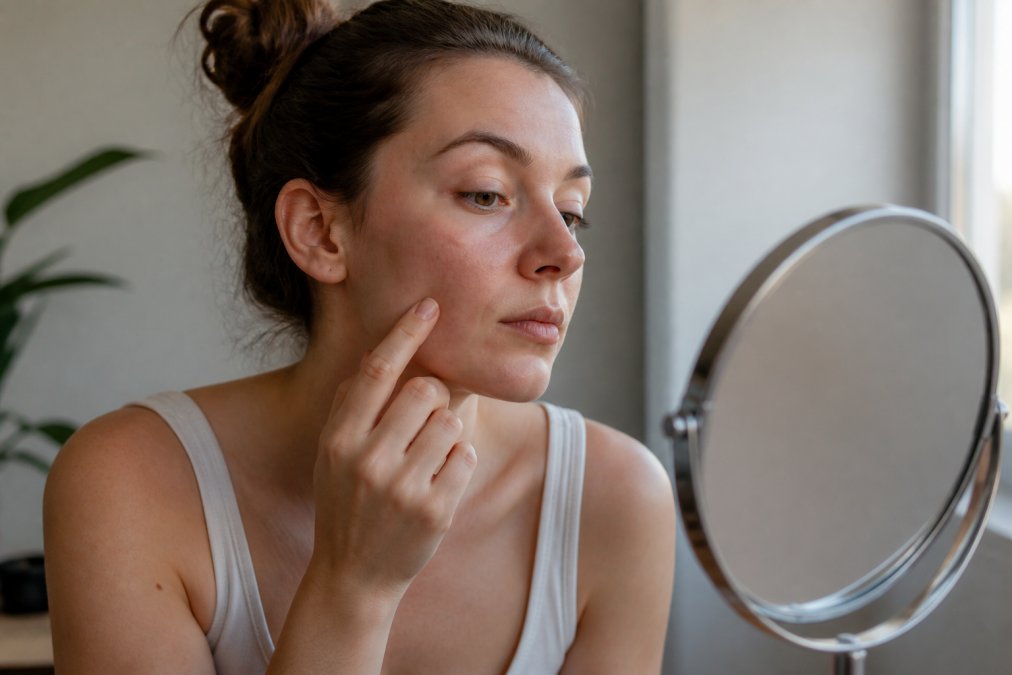
Identifying your skin type requires honest observation, not guesswork. Oily skin produces visible shine within hours of cleansing and often feels slick to the touch. Dry skin feels tight, may flake, and absorbs products quickly without leaving a dewy finish. Combination skin is oily in the T-zone (forehead, nose, chin) but normal or dry elsewhere. Sensitive skin reacts easily to fragrances, essential oils, or active ingredients, showing redness, irritation, or stinging.
Beyond skin type, you need to identify your specific skin concerns. Hyperpigmentation, acne, fine lines, uneven skin texture, and enlarged pores are separate issues that require targeted ingredients. Someone with oily skin prone to acne needs different products than someone with oily skin concerned about premature ageing. This distinction changes everything about which routine will deliver visible results.
The most common mistake is buying a full routine from one brand without assessing whether each product matches your actual skin profile. A hydrating moisturiser designed for dry skin will clog pores on oily skin. A lightweight serum formulated for sensitivity won't address hyperpigmentation concerns. Understanding your skin type and concerns first prevents wasted money and months of ineffective treatment.
The Skincare Layering Order Guide: Getting the Sequence Right
Product order matters far more than most people realise. Applying serums after moisturiser or moisturiser before active ingredients dramatically reduces efficacy. The correct layering order ensures each product absorbs properly and ingredients penetrate where they're needed.
The fundamental rule is simple: apply products from thinnest to thickest consistency. Thin, water-based products go on first. Heavier creams and oils go last. This allows each layer to absorb before the next one blocks it.
A complete skincare routine for visible results follows this sequence:
- Cleanser, Remove makeup, oil, and debris. Use morning and evening.
- Toner or essence, Hydrate and balance pH. Optional but beneficial for most skin types.
- Active ingredients (vitamin C, retinoids, acids), Apply to clean, dry skin. These are potent and need direct contact.
- Serum, Lightweight, concentrated treatments. Hyaluronic acid serums hydrate; niacinamide serums regulate sebum.
- Eye cream, Thinner than face moisturiser. The eye area needs gentler, more targeted care.
- Moisturiser, Seal in hydration and protect the skin barrier. Essential regardless of skin type.
- SPF (morning only), Sun protection factor prevents UV damage and hyperpigmentation. Non-negotiable for visible results.
- Facial oil (optional), Apply last if using. Locks in all previous layers.
Evening routines skip SPF but may include additional active ingredients. Morning routines prioritise sun protection. The layering order remains consistent.
A common mistake is applying moisturiser before serums, which blocks absorption. Another is skipping SPF, then wondering why hyperpigmentation worsens. The layering order determines whether your skincare routine for visible results actually works or merely feels luxurious.
Best Skincare Ingredients for Glowing Skin and How They Work
Not all ingredients are equal. Some address surface-level concerns; others trigger genuine cellular change. Understanding what each ingredient does prevents wasting money on products with impressive marketing but minimal efficacy.
Retinoids are the gold standard for anti-ageing and cell turnover. They increase the rate at which skin cells renew, reducing fine lines, improving texture, and fading hyperpigmentation. Start with low concentrations (0.3% retinol) and increase slowly. Retinoids cause dryness and sensitivity initially, this is normal and temporary.
Vitamin C is a powerful antioxidant that brightens skin and protects against environmental damage. It works best in serums at concentrations of 10-20%. Stability matters; look for dark packaging to prevent oxidation. Vitamin C pairs well with SPF for enhanced sun protection.
Hyaluronic acid holds up to 1000 times its weight in water, making it essential for hydration. It works at all skin types and layers beautifully under moisturisers. Don't confuse hydration with moisture, hydration is water content; moisture is oil content. Hyaluronic acid addresses hydration.
Niacinamide (vitamin B3) regulates sebum production, reduces pore appearance, and strengthens the skin barrier. It's particularly effective for combination and oily skin. Concentrations of 4-5% deliver visible results without irritation.
Alpha hydroxy acids (AHAs) and beta hydroxy acids (BHAs) exfoliate by dissolving the bonds between dead skin cells. AHAs work on the surface; BHAs penetrate pores. Both improve skin texture and cell turnover. Use 2-3 times weekly to avoid over-exfoliation.
Peptides signal skin cells to produce more collagen, improving firmness and elasticity. They're gentler than retinoids and suitable for sensitive skin. Results appear gradually over weeks.
The most effective skincare routine for visible results combines complementary ingredients rather than stacking everything at once. Retinoids and vitamin C shouldn't be used together (they compete for skin penetration). AHAs and BHAs shouldn't both be used on the same evening. Strategic pairing amplifies results.
How Long to See Skincare Results: What the Timeline Actually Looks Like
This is where most guides fail their readers. They skip the timeline entirely, leaving people expecting overnight transformation and abandoning routines after two weeks.
Visible results take time because skin cells renew on a biological schedule, not a marketing one. The epidermis (outer layer) completely renews every 28 days (peer-reviewed research). The dermis (deeper layer where collagen lives) changes on a 6-12 week cycle (peer-reviewed research). This is why skincare results appear gradually, not instantly.
Week 1-2: Hydration improves, skin feels smoother. These are surface-level changes. Don't expect major visible differences yet.
Week 3-4: Fine lines appear less pronounced due to improved hydration. Skin tone becomes more even. Acne may worsen temporarily (purging) as exfoliating ingredients accelerate cell turnover and bring congestion to the surface.
Week 6-8: Hyperpigmentation begins fading. Skin texture improves noticeably. Acne calms if the routine is appropriate for your skin type. Fine lines continue softening.
Week 12+: Significant visible improvement in skin elasticity, firmness, and overall radiance. Retinoid users see substantial reduction in fine lines. Vitamin C users notice brightening and more even tone.
The critical insight most people miss: the first 4 weeks feel underwhelming. This is when most people quit, convinced skincare doesn't work. The real transformation happens weeks 6-12, after they've already abandoned the routine.
Consistency matters more than product quality at this stage. A basic routine used religiously for 12 weeks delivers better results than an expensive routine used sporadically. Missing days resets your timeline. Missing weeks means starting over.
Building Consistency: The Psychology of Sticking With Your Routine
This is where most skincare routines fail. Not because the products don't work, but because people stop using them.
Consistency isn't about willpower. It's about removing friction and building habits that require minimal decision-making. The most consistent skincare users don't rely on motivation, they've engineered their environment to make the routine automatic.
Place products where you use them. Keep your morning routine on your bathroom counter. Keep your evening routine beside your bed or in your bathroom. Visible products are used; hidden products are forgotten. This single change increases consistency dramatically.
Anchor the routine to an existing habit. Brush teeth, then skincare. Morning coffee, then skincare. This leverages existing neural pathways instead of trying to build a new habit from scratch.
Start with the minimum viable routine. Five products used consistently beat ten products used sporadically. A basic cleanser, serum, moisturiser, and SPF routine, maintained for 12 weeks, delivers visible results. Adding more products later, once the habit is solid, prevents overwhelm.
Track progress visually. Take a photo every two weeks under consistent lighting. Your eyes adjust gradually to changes; photos reveal what you've missed. Seeing progress reinforces consistency.
Expect the motivation dip. Week 3-5 is when most routines fail. The initial excitement fades, results aren't yet visible, and the routine feels like a chore. This is completely normal. Push through this phase. Week 6 onwards, results become visible and motivation returns naturally.
The psychology of consistency reveals an uncomfortable truth: your skincare routine for visible results is less about the products and more about your behaviour. The best routine in the world fails if you use it three times weekly. A mediocre routine used twice daily succeeds.
virelle beauty's approach recognises this. Rather than overwhelming customers with 15-step routines, we curate focused collections that make consistency achievable. The ritual aspect, purposeful, minimalist, refined, transforms skincare from a chore into something you actually want to do.
Tracking Progress and Adjusting Your Routine for Better Outcomes
Visible results require measurement. Without tracking, you're relying on memory and perception, both of which are unreliable.
Photograph your skin every two weeks. Use the same lighting, same angle, same time of day. Phone cameras work fine. After six weeks, compare week 1 to week 6. The difference is usually obvious in photos even when you can't see it in the mirror.
Document specific concerns. If hyperpigmentation is your target, photograph those areas specifically. If fine lines around the eyes concern you, take close-ups. General "before and after" photos are less useful than targeted documentation.
Notice texture changes. Run your fingers across your skin. Does it feel smoother? Firmer? Less congested? Texture improvements often appear before visible changes.
Track breakouts or sensitivity. Note dates, severity, and which products were used. This reveals which ingredients your skin tolerates and which trigger reactions. A simple spreadsheet prevents guessing.
Adjust based on results, not trends. If your routine is delivering visible results at week 8, keep it unchanged for another 4 weeks. The temptation to switch products or add "better" ingredients is strongest when you're finally seeing progress. Resist it.
Know when to change. If you've maintained a routine for 12 weeks with zero improvement, something isn't working. Either the routine doesn't match your skin type, you're not using products correctly, or your skin concerns require professional intervention. At that point, adjust one variable at a time. Change the serum, not the entire routine. Give it another 6 weeks.
Tracking transforms skincare from hope into data. You'll know exactly which products, which layering order, and which timeline delivered your visible results. This knowledge lets you replicate success and avoid repeating failures.
Building a skincare routine for visible results isn't complicated. It requires understanding your skin, applying products in the correct order, choosing ingredients that address your specific concerns, and maintaining consistency long enough to see change. Most routines fail because people expect instant results or abandon them during the critical week 3-5 phase when visible improvement hasn't yet appeared.
At virelle beauty, we've curated products specifically chosen for efficacy and compatibility, removing the guesswork from routine building. Our Led Facial beauty instrument is designed to help rejuvenate your skin through innovative LED technology, complementing topical routines beautifully. Combined with targeted serums and moisturisers, it transforms your skincare ritual from maintenance into genuine preventative care. Start with a focused routine, track your progress, and commit to the 12-week timeline. Visible results aren't a mystery, they're a predictable outcome of the right products, the right sequence, and the right consistency.

Frequently Asked Questions
Q: How long does it take to see results from a skincare routine?
A: Most active ingredients show visible improvement between 4 to 12 weeks of consistent use. Hydration and moisturiser effects appear within days, but cell turnover and deeper concerns like fine lines or hyperpigmentation require patience. The timeline depends on your skin barrier condition, the potency of ingredients like retinoids or vitamin C, and how faithfully you follow your routine. Tracking progress with weekly photos helps you spot subtle changes you might otherwise miss.
Q: What is the correct skincare layering order?
A: Apply products from thinnest to thickest consistency: cleanser, toner or essence, serums (vitamin C, hyaluronic acid), treatments (retinoids, active ingredients), eye cream, moisturiser, and SPF in the morning. This order maximises absorption and prevents heavier products from blocking lighter actives. Allow 30-60 seconds between layers for each product to absorb fully. Consistency in this sequence is crucial for dermal health and visible results.
Q: Which ingredients actually deliver visible results?
A: Retinoids accelerate cell turnover and reduce fine lines. Vitamin C brightens and builds antioxidant protection. Hyaluronic acid hydrates deeply and plumps skin texture. Niacinamide regulates sebum and strengthens the skin barrier. Peptides support skin firmness. Sunscreen with adequate SPF prevents hyperpigmentation and photodamage. Ingredients like these have clinical efficacy backing their claims. Patch testing new actives prevents sensitivity reactions and ensures your skin barrier tolerates them.
Q: How do I know if my skincare products are actually working?
A: Take baseline photos in consistent lighting before you start, then weekly photos at the same time of day. Track specific concerns: Is your skin texture smoother? Are fine lines less visible? Is hyperpigmentation fading? Does your skin feel hydrated and balanced? Keep a simple log of how your skin feels, less reactive, more resilient, better absorption of subsequent products. Real results show in skin barrier strength, reduced sensitivity, and visible changes in tone or texture, not just how products feel on application.
Q: What's the difference between morning and evening skincare routines?
A: Morning routines prioritise sun protection and hydration to defend against daily environmental stress. Include a gentle cleanser, hydrating serum, moisturiser, and SPF, the most critical step. Evening routines can include active ingredients like retinoids that increase skin sensitivity to sunlight. Use a more thorough cleanser to remove makeup and pollution, apply treatments that promote cell turnover overnight, and use richer moisturisers or masks. This split allows you to address preventative care (morning) and repair (evening) separately.
Q: Can I use multiple active ingredients at once?
A: Layer actives cautiously. Retinoids and vitamin C can work together but require careful timing, apply vitamin C in the morning, retinoids at night. Avoid combining retinoids with other exfoliating actives like AHAs or BHAs in the same routine; alternate them on different nights. Always introduce one active at a time, waiting 2-4 weeks before adding another, so you can identify which product causes any skin sensitivity. Overloading your routine compromises your skin barrier and reduces the efficacy of each ingredient.
Q: How do I build a skincare routine on a budget without sacrificing results?
A: Focus on the non-negotiables: a good cleanser, SPF, and one active ingredient that targets your primary concern. A single well-chosen serum with proven ingredients like hyaluronic acid or niacinamide delivers more visible results than multiple mediocre products. Use a basic moisturiser suited to your skin type rather than premium options. Many effective actives are available at accessible price points. Consistency matters far more than product count, using one effective routine daily beats switching between expensive products sporadically.
Q: Why does my skin look worse before it gets better?
A: Active ingredients like retinoids trigger a 'retinisation' period where skin may appear flaky, slightly red, or more congested as cell turnover accelerates. This is temporary, usually 2-4 weeks, and indicates the product is working. Your skin barrier is adjusting to increased cell renewal. Support this phase with extra hydration, a good moisturiser, and SPF. Avoid over-exfoliating or adding more actives. If sensitivity persists beyond 4 weeks or worsens significantly, patch test or reduce frequency until your skin barrier strengthens.
This article was written using GrandRanker
0 comments