

Table of Contents
- Understanding What Clean Beauty Really Means
- How to Identify Greenwashing in Skincare
- Reading Labels: Ingredients to Avoid and Why They Matter
- Best Clean Beauty Certifications to Look For
- Ingredient Transparency: What Brands Should Disclose
- How to Choose Clean Beauty Brands That Match Your Skin Type
- Evaluating Brand Claims: Beyond Marketing Language
- Frequently Asked Questions
Last Updated: September 2, 2026
Understanding What Clean Beauty Really Means
Clean beauty isn't legally defined. There's no government regulator certifying products as "clean," and no official standard separating clean skincare from conventional formulations. At its core, clean beauty refers to products formulated without ingredients many consumers consider harmful or unnecessary, prioritising transparency about ingredient safety and often emphasising natural or naturally-derived components. However, interpretation varies widely between brands, retailers, and consumers.
The distinction typically hinges on avoiding synthetic chemicals, preservatives, and additives that conventional beauty has relied on for decades. But some synthetic ingredients are safer and more stable than their natural alternatives, requiring a nuanced approach rather than accepting marketing language at face value.
The clean beauty movement has grown partly as a reaction to greenwashing, partly as a genuine consumer shift toward ingredient transparency, and partly as a marketing category benefiting brands willing to invest in clearer labelling. Your job when selecting clean beauty brands is distinguishing between these forces and identifying which products actually deliver on their promises.
How to Identify Greenwashing in Skincare
Greenwashing in beauty means marketing products as cleaner, safer, or more natural than they actually are. A brand might highlight one clean ingredient while burying questionable ones in fine print, or use vague language like "naturally derived" without explaining what that means chemically.
Common greenwashing tactics include using terms like "clean," "natural," "pure," or "chemical-free" without substantiation. The word "chemical" itself is misleading, everything is made of chemicals, including water and salt. Claims of being "chemical-free" misrepresent the product entirely.
Another red flag is selective transparency. A brand might proudly display botanical extracts on the front whilst hiding synthetic preservatives in microscopic print on the back. Genuine clean beauty brands disclose their full ingredient list prominently and explain why each component is there.
Vague certifications or made-up seals are warning signs. If a brand claims certification from an unfamiliar organisation, investigate further. Legitimate third-party certifications come from established, independently-verified organisations with public standards.
To spot greenwashing, compare what a brand says about itself to what independent sources say. Look for consistency between marketing language and actual ingredient lists. Check whether the brand responds transparently to customer questions about formulations.
Reading Labels: Ingredients to Avoid and Why They Matter
Learning to read beauty labels is essential when choosing clean beauty brands effectively. The ingredient list on the back tells you far more than any marketing claim on the front.
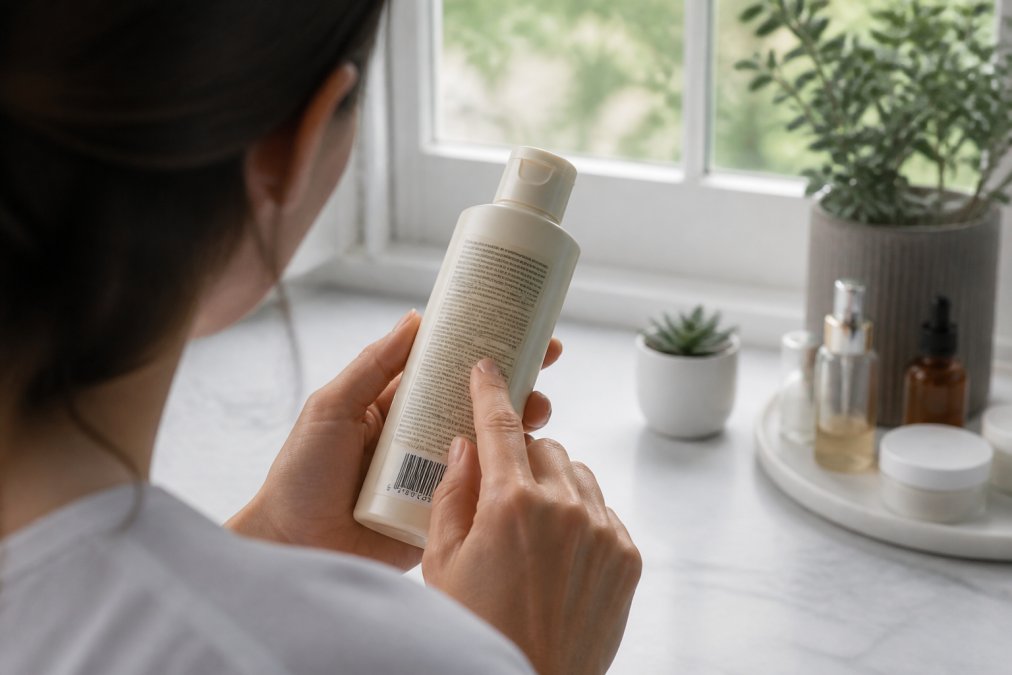
In the UK and EU, ingredients are listed in descending order by weight. The first five ingredients make up the bulk of the formula. If water is listed first, that's normal, it's the delivery vehicle. What matters is what comes after and in what concentration.
Common harmful ingredients in conventional beauty
Parabens (methylparaben, propylparaben, butylparaben) are preservatives extending shelf-life but raising safety concerns in some studies. Phthalates are chemicals used in fragrances and plastics, classified as endocrine disruptors (peer-reviewed research). Sulfates like sodium lauryl sulfate strip natural oils from skin and hair. Polyethylene glycols (PEGs) are synthetic compounds potentially carrying impurities depending on manufacturing. Synthetic fragrances can irritate sensitive skin; clean brands typically use essential oils or fragrance-free formulations instead. Silicones create a smooth feel but can build up on skin and aren't biodegradable. Formaldehyde and formaldehyde releasers are known irritants and potential carcinogens at high concentrations.
How to use a clean beauty ingredient checker
Rather than memorising every questionable ingredient, use digital tools to decode labels. Websites and apps like INCIDecoder and Paula's Choice Ingredient Dictionary let you search any ingredient and understand its function, safety profile, and whether it aligns with clean beauty standards.
When using these tools, look for the ingredient's function, its origin, and any safety concerns flagged by regulatory bodies. Pay attention to concentration, an ingredient present in tiny amounts poses less risk than one near the top of the list. Once you know your criteria, the ingredient checker becomes a quick screening tool.
Best Clean Beauty Certifications to Look For
Third-party certifications provide independent verification that a product meets specific clean beauty standards. However, not all certifications carry equal weight.
The COSMOS certification is one of the most rigorous. It requires products to contain a minimum percentage of natural or organic ingredients, prohibits certain synthetic chemicals, and mandates sustainable sourcing and ethical production. ECOCERT certification focuses on organic content and environmental responsibility, with particular emphasis on biodegradability and packaging.
The Leaping Bunny certification indicates cruelty-free status, the product and its ingredients haven't been tested on animals. The Vegan Society's trademark confirms that a product contains no animal-derived ingredients and hasn't been tested on animals.
Soil Association certification in the UK guarantees organic status under strict standards. Products must meet EU organic regulations and undergo rigorous inspection.
Some brands don't carry third-party certifications but have rigorous internal standards and transparent testing. Virelle Beauty curates a refined collection of skincare products chosen specifically for visible, authentic results without fillers or false promises. By selecting brands that prioritise ingredient transparency and effectiveness over certification badges alone, you often get more reliable information than a certification provides.
Ingredient Transparency: What Brands Should Disclose
True ingredient transparency goes beyond listing components. A genuinely transparent brand explains why each ingredient is included, what it does, and why they chose it over alternatives.
The best clean beauty brands publish detailed ingredient breakdowns on their websites, explaining the function of each component, disclosing the source of ingredients, and explaining reasoning behind any synthetic choices. They discuss trade-offs: why they chose a particular preservative system or why certain ingredients are necessary for stability and efficacy.
Transparency also means disclosing shelf-life and stability information. Clean formulations, particularly those without conventional preservatives, sometimes have shorter shelf-lives or require specific storage conditions. A transparent brand tells you this upfront.
Look for brands that respond to customer questions about ingredients. The quality of a brand's customer communication reveals a lot about their actual commitment to transparency.
Virelle Beauty exemplifies this approach by carefully selecting products for real results and being transparent about what you're getting. When a brand curates rather than manufactures, it's accountable for every product it recommends, which naturally drives higher standards of disclosure.
How to Choose Clean Beauty Brands That Match Your Skin Type
Choosing clean beauty brands becomes more strategic when you account for your specific skin type and concerns. A clean formula that works beautifully for oily, acne-prone skin might be completely wrong for dry, sensitive skin.
Start by understanding your skin type accurately. Know whether your skin is oily, dry, combination, or sensitive, and whether you have specific concerns like acne, rosacea, eczema, or hyperpigmentation. Many people misjudge their skin type because they're using the wrong products.
Once you know your baseline, look for clean brands addressing your specific needs. For oily, acne-prone skin, seek brands using lightweight hydrators, non-comedogenic oils, and gentle exfoliants. For dry skin, prioritise products with humectants like glycerin and hyaluronic acid, plus emollients like plant oils and butters. For sensitive skin, look for minimal ingredient lists, fragrance-free options, and brands avoiding common irritants.
Testing for sensitivity before committing
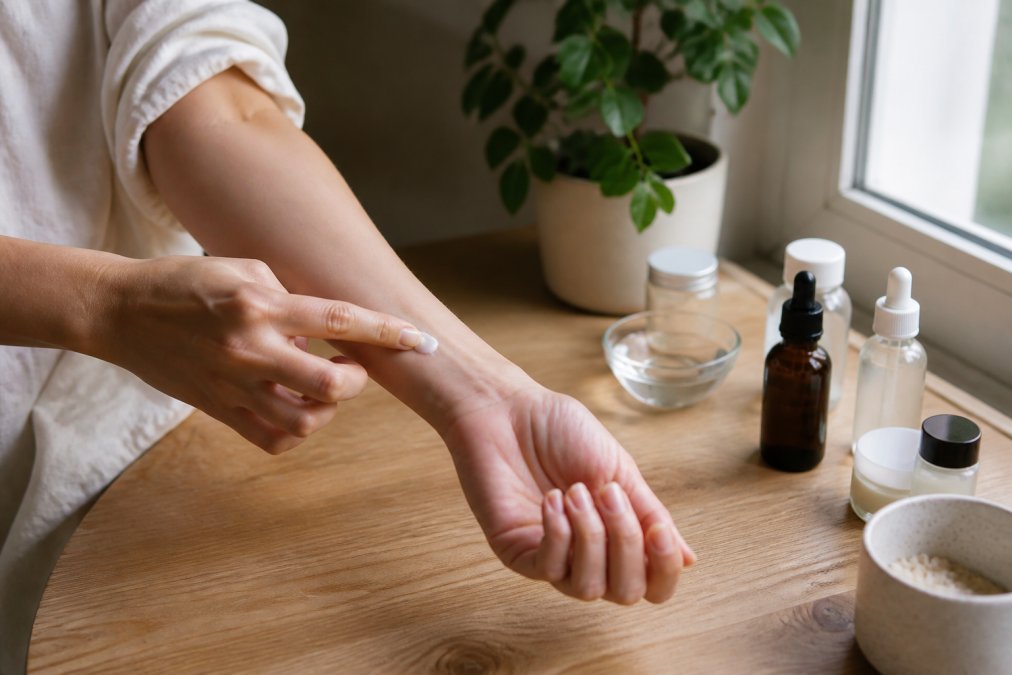
Before committing to a full routine, test individual products on a small area of skin. Apply a small amount behind your ear or on your inner arm and wait 24-48 hours for any redness, itching, burning, or other reactions.
This patch test approach prevents wasting money on products that irritate your skin and helps you identify which specific ingredients trigger reactions. Keep a simple log: product name, ingredients tested, date, and any reactions observed. Over time, you'll notice patterns.
If you have genuinely sensitive skin or existing conditions like rosacea or eczema, consult a dermatologist before introducing new products. They can recommend clean brands known to work well for your specific condition.
Evaluating Brand Claims: Beyond Marketing Language
Marketing language in beauty is notoriously vague. Terms like "natural," "pure," "gentle," and "effective" mean nothing without context. Learning to evaluate brand claims critically is essential when choosing clean beauty brands with confidence.
When a brand claims a product delivers "visible results," ask: visible to whom, in what timeframe, and measured how? "Reduces the appearance of fine lines by 15% in eight weeks" is measurable; "visibly reduces fine lines" is marketing fluff. Brands making specific claims should cite the studies or testing behind them.
"Clinically proven" and "dermatologist-tested" are common claims sounding credible but often meaning very little. Ask for evidence and don't accept vague assurances.
"Hypoallergenic" has no legal definition. It simply means the product is less likely to cause allergic reactions, but for whom? This term is essentially meaningless without additional context.
Clean beauty brands often use words like "natural" and "organic" without precision. Natural doesn't mean safe, and organic doesn't mean clean. What matters is whether specific ingredients are present or absent, and whether the brand can explain why those choices matter for efficacy and safety.
The most credible brand claims are specific, measurable, and backed by accessible evidence. When evaluating any brand, separate marketing from substance. Read independent reviews from consumers with your skin type and concerns. The best clean beauty brands welcome scrutiny because their products speak for themselves.
Choosing clean beauty brands requires moving beyond marketing language and understanding what actually goes into your skincare. The absence of legal definition around "clean beauty" means you're responsible for setting your own standards and evaluating brands against them. Start by learning to read ingredient lists, identify greenwashing tactics, and recognise which third-party certifications actually matter. Test products carefully before committing to full routines, and prioritise brands demonstrating genuine transparency about their formulations and the reasoning behind their ingredient choices.
Virelle Beauty curates skincare products specifically chosen for visible, authentic results without fillers or false promises. By selecting from a refined collection where every product has been evaluated for real efficacy and ingredient integrity, you skip the overwhelming process of evaluating countless brands yourself. With free UK shipping on orders over £30, building a genuinely effective clean beauty routine becomes both simpler and more accessible. Learn more about clean beauty standards from the Soil Association and explore the COSMOS certification requirements to deepen your understanding of independent verification standards. Start with one carefully-chosen product that matches your skin type, test it properly, and build from there.
Frequently Asked Questions
What does 'clean beauty' actually mean, and is there a legal definition?
Clean beauty refers to products formulated without potentially harmful synthetic chemicals, focusing on ingredient transparency and safety. However, there is no official legal definition in the UK or EU, which means brands can use the term loosely. The closest regulatory framework comes from the EU Cosmetics Regulation, which bans certain ingredients but does not define 'clean' as a category. This lack of standardisation is why reading ingredient lists and checking certifications matters more than relying on marketing claims alone.
How can I spot greenwashing when choosing clean beauty brands?
Greenwashing in skincare occurs when brands use vague terms like 'natural', 'pure', or 'clean' without backing them up with transparent ingredient lists or third-party certifications. Red flags include: unclear sourcing claims, absence of a full ingredient disclosure, unsubstantiated 'toxin-free' claims, and packaging that emphasises sustainability but contains non-recyclable materials. Genuine clean beauty brands provide detailed ingredient breakdowns, explain why they've chosen specific components, and hold recognised certifications from bodies like the Soil Association or Cruelty Free International.
What certifications should I look for when buying clean beauty products?
Key certifications to trust include the Soil Association Organic Standard (for botanical ingredients), Leaping Bunny (cruelty-free), Vegan Society (plant-based formulations), and COSMOS Organic (stringent ingredient and production standards). These third-party certifications require brands to meet strict criteria and undergo regular audits, making them far more reliable than self-declared 'clean' labels. Always check the certification body's website to verify legitimacy.
How do I know if a clean beauty product will actually work for my sensitive skin?
Start with patch testing: apply a small amount behind your ear or on your inner wrist and wait 24-48 hours before using on your face. Look for products with hypoallergenic formulations and ingredient lists that avoid known irritants like synthetic fragrances, essential oils, and alcohol denat. Brands that disclose their full ingredient list and offer detailed information about preservative systems and bio-compatibility are more likely to work for reactive skin. If you have specific sensitivities, use a clean beauty ingredient checker tool to cross-reference the product against your known triggers before purchasing.
This article was written using GrandRanker
0 comments